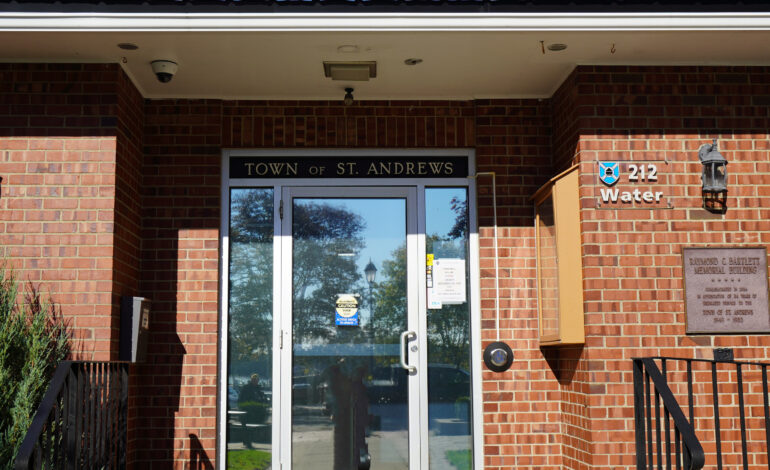



Recently, the Local Governance Commission advised councils in New Brunswick that code of conduct and conflict of interest meetings could not be held in closed session. This is due to the broad interpretation that our local governments have held of the laws that govern them.
This advisory appears to have been a surprise to the governing councils within Charlotte County—who had been holding those meetings in closed session. That means, our local governments are denying the public the transparency and accountability it deserves. In small communities like Charlotte County, it appears this responsibility should be taken far more seriously.
The councils elected to sit at the leadership table are your neighbours, friends and perhaps even your family—this makes it difficult to look at them with objective eyes. However, operating behind closed doors, in secret, whether intentional or not, deprives the public of what it wants most—a hand in shaping the communities they live and work in.
Closed meetings are to protect specific things, not the opinions of elected leaders, all outlined in the Local Governance Act in Section 68(1). One will find there is no mention of the words “initiatives” or “presentations” or “direction.”
This is not unique to Charlotte County—or municipal politics. Conversations happen in rooms where the public is never allowed. But what is the cost of keeping the public in the dark? That consequence presents itself in the form of a ballot box. Our political fabric in this country is sewn together by the opinions of elected leaders based on what they allowed the public to see and understand about them—and how those are reflected in their own values.
A curated cocktail of agreeable statements makes the decision easier to swallow.
Recently, a St. Stephen councillor suggested cameras have made them feel like they cannot be as open or honest. This is exactly the opposite of their intended purpose—accessibility and accountability.
Geoff Martin, a political researcher and assistant professor at Mount Allison University, said leaders have to be accountable for the things they say—and cannot only invite the public to communicate in ways that suit them.
It is not about a certain comfort level. It is a privilege to be elected to any political office, albeit a significant sacrifice. The privilege of serving your community should steer all those with decision-making power toward good governance.
Operating secretly or in the dark robs Canadians of the very principle our country is founded upon—democracy—in a time when it is being tested by some of the greatest powers around the world.
— The Courier Editorial Board