


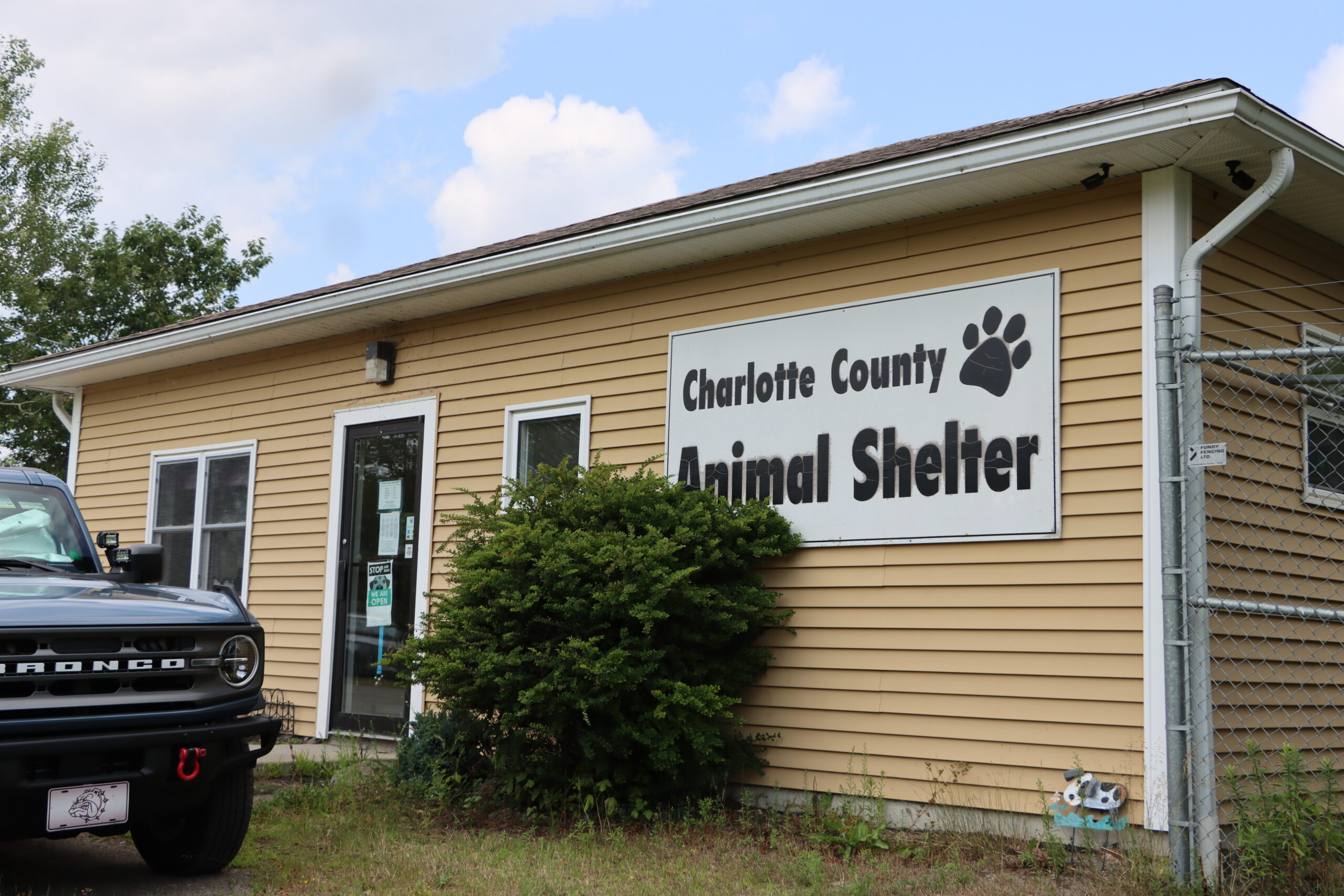
The Charlotte County Animal Shelter (CCSPCA) is at capacity as the summer season brings more cats outdoors.
When cats aren’t spayed and neutered, the community ends up with an overflow of kittens.

“We currently have 57 cats, and 46 of them are under six months old, ranging from one day old up to five months. We haven’t got the space for them all,” said Sherry Doucette of the CCSPCA. “We’ve got lots of foster homes, which is helping, but we could do with more.”
Doucette said that spaying and neutering are important processes to prevent the “knock-on effect,” which happens when cats have kittens, then those kittens don’t get spayed or neutered either.
When the shelter hits capacity, it is at a higher risk of diseases and infections among the cats, which Doucette said can result in felines dying.
It is using a waiting list and a bias: meaning strays take priority over surrendered pets.
The shelter also has a way for individuals with low income to apply for support with the cost of spaying and neutering called Low Income Snap, according to Doucette.
Another service under the CCSPCA is called Casey’s Cupboard. It supplies animal food and has no prerequisites.

“They can ask for help once a month through us, just to get them through that hard period where they’re struggling to feed their animal,” said Doucette.
According to Doucette, the first way that people can help the shelter is to spay and neuter their pets.
“And also donations, things like paper towels, bleach, cat food, dog food, all those sorts of things. The things that we use every day would just help keep us going,” said Doucette.
Half of the shelter’s cats are currently in foster homes. The shelter also takes care of some dogs, adding to their workload.
The shelter needs foster homes and volunteers to survive, and it encourages individuals to reach out if they can help.
One way to help is through the shelter’s fundraisers, which are run by Florence Small, the CCSPCA’s fundraiser and volunteer coordinator.
It currently has a raffle for a helicopter tour, another raffle for a paddleboard at the sand sculpting competition at New River Beach, and ‘sundaes on a Monday’ at Chocolate Fest in Saint Stephen.

The shelter also needs volunteers to walk dogs, assist with fundraisers, and come to its “cat socials,” according to Small.
“You come into the shelter, you meet one of the cats, and you spend time with them for a bit. So you give them treats, and help with their shyness. It just kind of helps them break down their walls. For example, one of our cats, Jethro, was quite a spicy cat when he started here at the shelter. But one of our volunteers and colleagues has spent some time with him, and he’s now become a very friendly cat,” said Small.
To apply for a cat social, fill out this form: Volunteer Application (BAS)
Some cats are found in homes or out in the wild. It’s something Theresa Hunter, chairperson for the Charlotte County Chapter of Cat Rescue Maritimes (CARMA), is often tasked with doing.

CARMA is a trap, neuter, and return program for feral cats, according to Hunter.
Hunter said that a trap-neuter-return program is different from a trap-neuter-release, where return means bringing feral cats back to their original colonies.
“Cats will try and get back to where they came from, so they need to go back to where we trap them to be released,” said Hunter.
CARMA brings cats to the CCSPCA that are more friendly and can be adopted out, but their main goal is to stop the overpopulation of cats in the wild, Hunter explained.
“We focus on the cats that are too feral to go into a shelter. The shelter deals with kitties that can be picked up and held and patted, then adopted out into homes, whereas ferals are more comfortable out on their own.”
Hunter said that when an individual calls the organization, it covers the cost of surgeries and will also help out with food and shelter.
“We’d like to let people know that there’s no need to drop cats off in the countryside or in maybe unpopulated areas. We know that you might think you’re giving them a chance, but it can end in disaster for the cats,” said Hunter.
The organization had 13 chapters spread between New Brunswick and Nova Scotia, but has had to downsize to ten due to a lack of volunteers and an overwhelming number of cats.
Individuals can reach out for help from CARMA, or to volunteer at CA-R-MA | Cat Rescue Maritimes.
The forms to foster, volunteer, or adopt, can be found on the CCSPCA’s website at Charlotte County SPCA Animal Shelter – St Stephen NB.


