

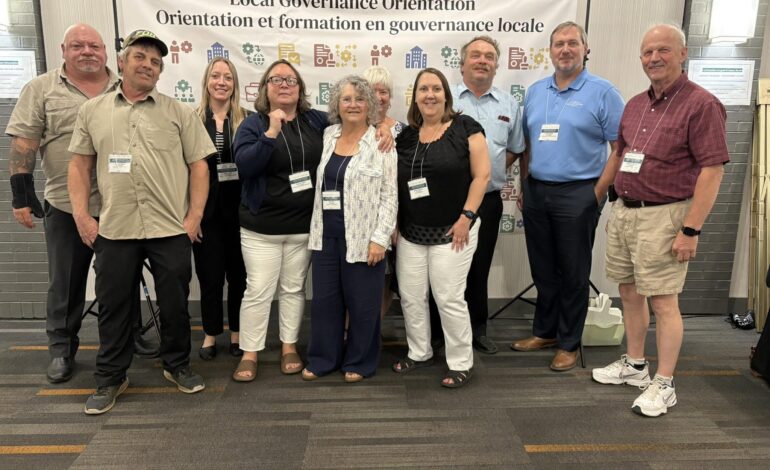
About 92 per cent of municipal leadership local government training in Saint John, which was recommended to be mandatory by the Local Governance Commission (LGC).
The Department of Local Government confirmed 550 local councillors and mayors attended the two days of training in the port city.
It served as an introduction for both new and returning members. In September 2025, the commission recommended mandatory training for elected officials and staff.
“Specifically, confusion over governance principles and legal obligations is leading to avoidable conflict, expense, and stress. Mandatory training in the key areas identified by the Commission is a straightforward and efficient way the Department can help support local governments, especially newly-amalgamated communities,” Commission Chair Giselle Goguen said in a release at the time.
Grand Manan Mayor Bonnie Morse said all of the council attended the training.
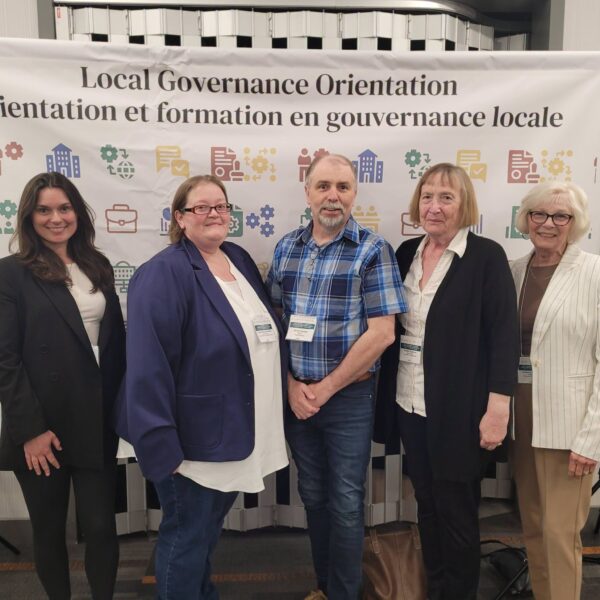
“For us, particularly when we were elected in 2021, it was during COVID-19 and all the training was online,” she said. “So just to be able to be there in person was huge. For me, the networking piece is always one of the biggest benefits.”
She said she believes it shows the commitment that elected councillors have to the village and the people they represent.
“It does provide sort of that opening and that base level for discussion and things we can talk about doing here on the island as we move forward,” she said.
Morse said going to training is a bit more complicated for those living on the island, requiring pre-planning and additional cost associated with staying in a hotel.
The training was held at the Saint John Trade and Convention Centre. It covered topics like roles and responsibilities, code of conduct and conflict of interest, local government finances, meeting procedures and the Right to Information and Protection of Privacy Act.
The Department of Environment and Local Government (ELG) confirmed to The Courier that 550 members of local government attended the training, but said it was going through the list of attendees to provide a breakdown, adding the list wouldn’t be provided until after the fall session.
“The department will publish online the names of those who participated in the orientation program, including the kick-off event and the upcoming fall sessions, once the program is completed this fall,” Vicky Lutes, a spokesperson for ELG, said in an email.
Brittany Merrifield, the president of the Union of Municipalities of New Brunswick (UMNB) said she considered the turnout good.
“I think having every single local government official at that would have been the goal, because sometimes it takes just one or two people that haven’t received that kind of training to throw a municipality off its stride,” she said in an interview.
She also spoke to the financial and time commitment that training takes.
Many municipal leaders have full-time jobs and other external commitments.
“That needs to be recognized as well.”
Each participant who completed the orientation program was given a certificate.
In June, Eastern Charlotte sent a letter to the province, as part of a letter writing campaign through UMNB, on the property tax reforms.
“Many municipalities and UMNB feeling that the language around that is shifting toward putting a lot of attention on the municipalities on the issues relating to property taxes,” said Chief Administrative Officer Jason Gaudet.
The council voted unanimously in support of sending the letter.
The Local Governance Commission said it was not involved in the training program provided by the department.
“Therefore, we do not have any knowledge of who attended or what the sessions included,” Mary Oley, the LGC director and general counsel, said in a statement. “As such, we do not have any firsthand knowledge of what occurred.”
No dates have been set yet for the fall sessions.