


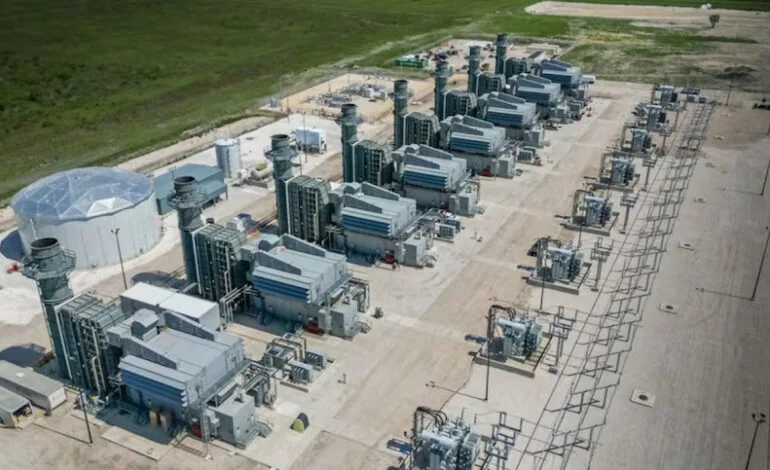
The provincial government has attached 45 conditions to the construction and operation of a natural gas plant set to be built in Tantramar.
An environmental impact assessment was conducted on the proposed facility to determined what conditions would need to be met before moving forward.
“Before ProEnergy can begin construction, seven conditions must be met and further five conditions before operating can begin,” Gillies LePage, the Environment Minister, said.
He said some of the conditions continue throughout the lifespan of the project.
The U.S.-based company is proposing to install 10 refurbished jet-engine turbines near Sackville, which are intended to support NB Power’s electricity needs.
NB Power has said it could face rolling blackouts if this plant was not online by 2028.
The utility said the project remains an important component in its plans to maintain energy security and ensure New Brunswickers have reliable electricity as demand continues to grow.
LePage said this project is a step-by-step process and that he believes ProEnergy has a lot of work to do.
The conditions
The project has a three-year clock to begin.
Indigenous consultation is required, specifically with Elsipogtog First Nation. Condition 6 requires the sharing of information regarding impacts to plants and wildlife through identified monitoring.
ProEnergy must first submit an environmental management plan before construction can begin, addressing issues like noise, lighting, spills, refuelling, diesel emissions and wildlife emergencies.
One of the largest conditions is that the facility must operate in synchronous condensing mode — which means the plant’s main purpose would be to support the electric grid rather than consistently generate electricity.
This led the EIA to impose two thresholds, 7 per cent at the lower level of operation and 17 per cent at maximum operation.
The EIA also imposed a condition that natural gas must be the main source of fuel for the gas plant, but diesel could be used as a backup. The natural gas is expected to come from the Maritime and Northeast pipeline. The company is required to notify the department when diesel is used but doesn’t set out limits for that use.
Well water monitoring is also in place for the neighbouring properties. Complaints are supposed to be made to ProEnergy, which will investigate and report to ELG.
ProEnergy is also required to provide a 2:1 ratio for impacted wetland compensation, with about 10 hectares expected to be impacted.
Several other conditions were imposed, according to the department.
LePage said non-compliance on any of the conditions could result in stopping the plant or shutting down operations.
ProEnergy told The Courier in a statement, while another important regulatory decision had been received it was not granting interviews or providing comment until permitting and regulatory requirements have been fully met.
Opposition remains
Tantramar MLA Megan Mitton, who is a member of the Green Party, said she wasn’t surprised by the conditional approval, but is disappointed.
“My community has made it very clear there is no social license,” she said.
She said any facility that burns natural gas or diesel is bound to have an impact on human health.
“This is so wrongheaded and a bad idea in so many ways, especially when we have other options,” Mitton said.
She doesn’t believe there is enough natural gas available the existing Maritimes and Northeast pipeline to sustain the facility.
“I also think it is important to consider this in the context of the Holt government … talking about potentially lifting the moratorium on fracking, which she previously said she wouldn’t do,” she said.
LePage denied the review was related to the operation of the natural gas plant.
The conditions, according to Mitton, are standard rules most facilities of this nature would be required to follow anyway.
“So, there is no real line in the sand,” she said.
The Conservation Council of New Brunswick also said it disagreed with the province’s decision to grant conditional approval to the RIGS project.
“This is a major new source of fossil fuel emissions at a time when New Brunswick needs to rapidly [reduce] them,” Beverly Gingras, executive director of the CCNB, said in a release. “The environmental impacts do not stop at the plant. We also have to account for methane emissions from producing and transporting natural gas, local air pollution, and the cumulative impacts of locking our electricity system into greater fossil fuel use.”
It remains unclear when construction on the facility could begin.