

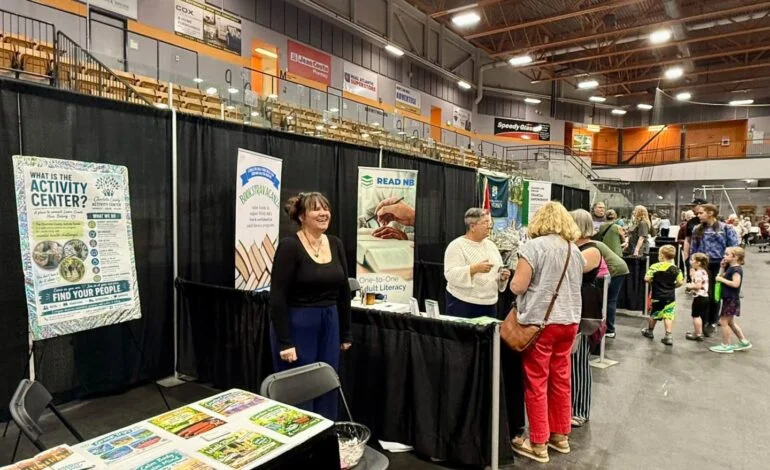
The main floor of the Garcelon Civic Centre was bustling Saturday as hundreds of people moved among more than 70 booths, discovering just how many services exist in Charlotte County and how easily even valuable resources can go unnoticed.
Upstairs, eight workshops covered topics including fraud prevention, personal safety, nutrition, budgeting and legal resources. A seniors’ café on the third floor offered refreshments and a place to catch up with friends, alongside a “Know Your Vitals” station, staffed by practical nursing students from NBCC St. Andrews.
The first Community Empowerment Fair, held Sept. 12, brought seniors, families and residents of all ages together with organizations serving Southwest New Brunswick. It was organized by Emma Keech of the Charlotte County Seniors Resource Centre and Nursing Home Without Walls Program, Sam Gullison of the Charlotte County Abuse Prevention Network, and Raymond Funk of the Southwest New Brunswick Service Commission’s community development department.
The three organizers had previously helped coordinate events serving different parts of the community. By joining forces, they were able to create a larger, more comprehensive fair for people of all ages and stages of life.
“It’s been very busy, very interactive,” Gullison said, speaking with The Courier. “We have over 70 vendors, and so it’s been a real show of community support.”
For Funk, seeing residents fill the building was the payoff after months of planning and the work of a large team of volunteers.
“Now that residents are coming in and we’re seeing all ages and stages participating on the floor here and in presentations upstairs, all the hard work is coming to fruition,” he said.
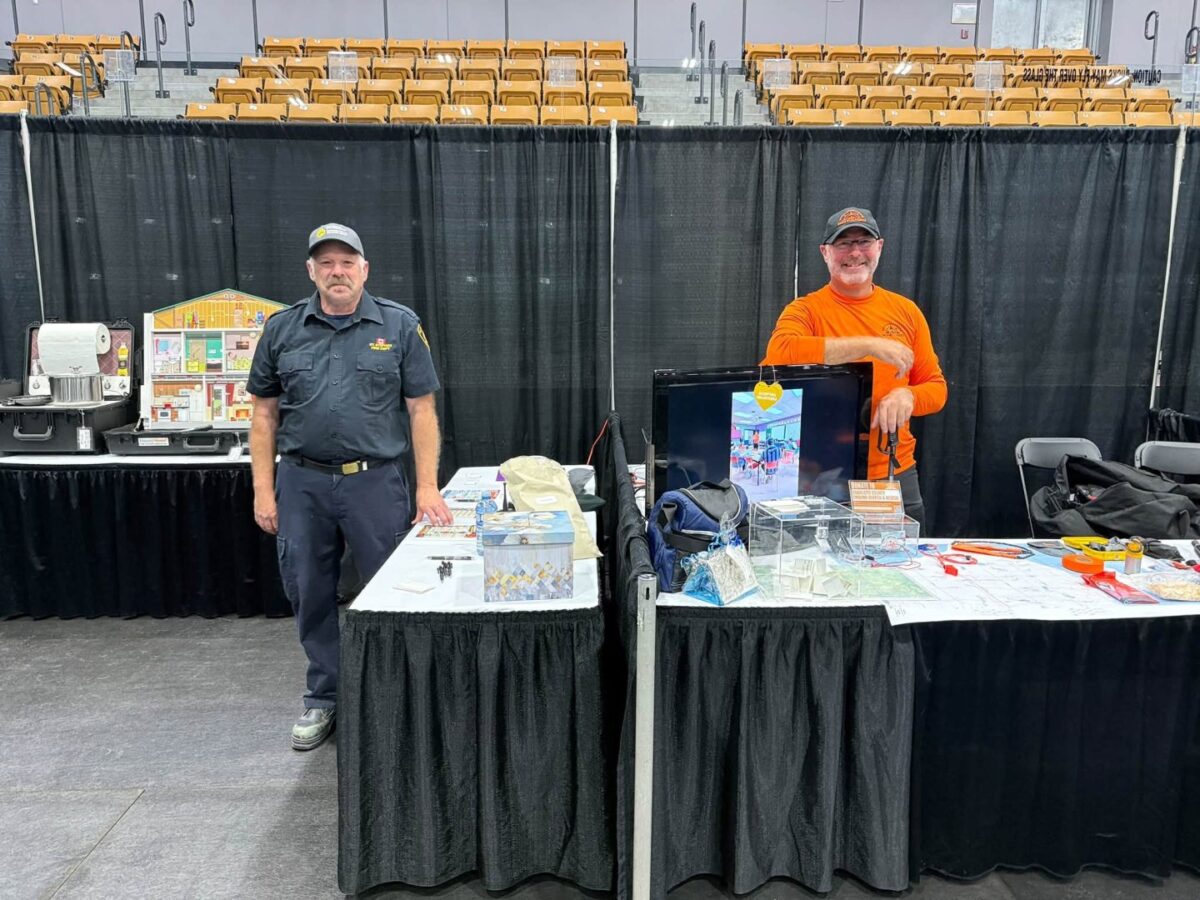
The workshops featured presentations by community experts, including Cpl. Lisa Williams of the St. Stephen RCMP, who spoke about scams, fraud and personal safety. Other sessions focused on healthy eating, household budgeting and legal resources available locally. Many of the presenters also had booths on the main floor, allowing residents to follow a workshop with a one-on-one conversation.
The fair’s greatest value may have been making those connections possible. In a rural region, a service can exist only a few communities away and still remain unknown to the people who need it.
That challenge was evident at the NBCC vital-sign clinic. Stephanie Ruckstuhl, an instructor in the college’s Licensed Practical Nurse program, brought second-year students to conduct blood pressure, blood glucose and blood oxygen checks.
By shortly before 2 p.m., the students had seen approximately 100 people. Ruckstuhl said she estimated that more than half did not have a family doctor.
“They’re giving some brief explanations and education to patients and clients so that they can know that they’re either healthy or that they need to go see a health practitioner,” she said.
The checks were not intended to replace medical care, but they could identify results requiring follow-up. High blood pressure and elevated blood glucose can be risk factors for serious medical conditions, including heart attack and stroke.
The conversations also offered NBCC students a lesson in the broader circumstances affecting health. Diet, income, housing, transportation and the ability to afford medication can all shape what appears on a blood pressure cuff or glucose monitor.
“We’re really training our students to understand that if somebody doesn’t have access to great food, it’s going to affect their blood pressure and it’s going to affect their sugars,” Ruckstuhl said.
Those conversations can reveal why someone is not taking medication as prescribed or when they last ate a proper meal. Students can then help connect them with community resources as well as medical care.
“People come out more aware of their own health,” Ruckstuhl said. “This health knowledge is so empowering.”
For Caroline Davies and Donne Smith of the Passamaquoddy Lodge Foundation, the fair offered a glimpse of how those services could work together more effectively.
Davies said the range of exhibitors demonstrated how services for children, seniors, health, recreation and public safety are interconnected.
“People are going to start making connections between their various roles,” she said. “That will make a much better integrated service network for people in Charlotte County.”
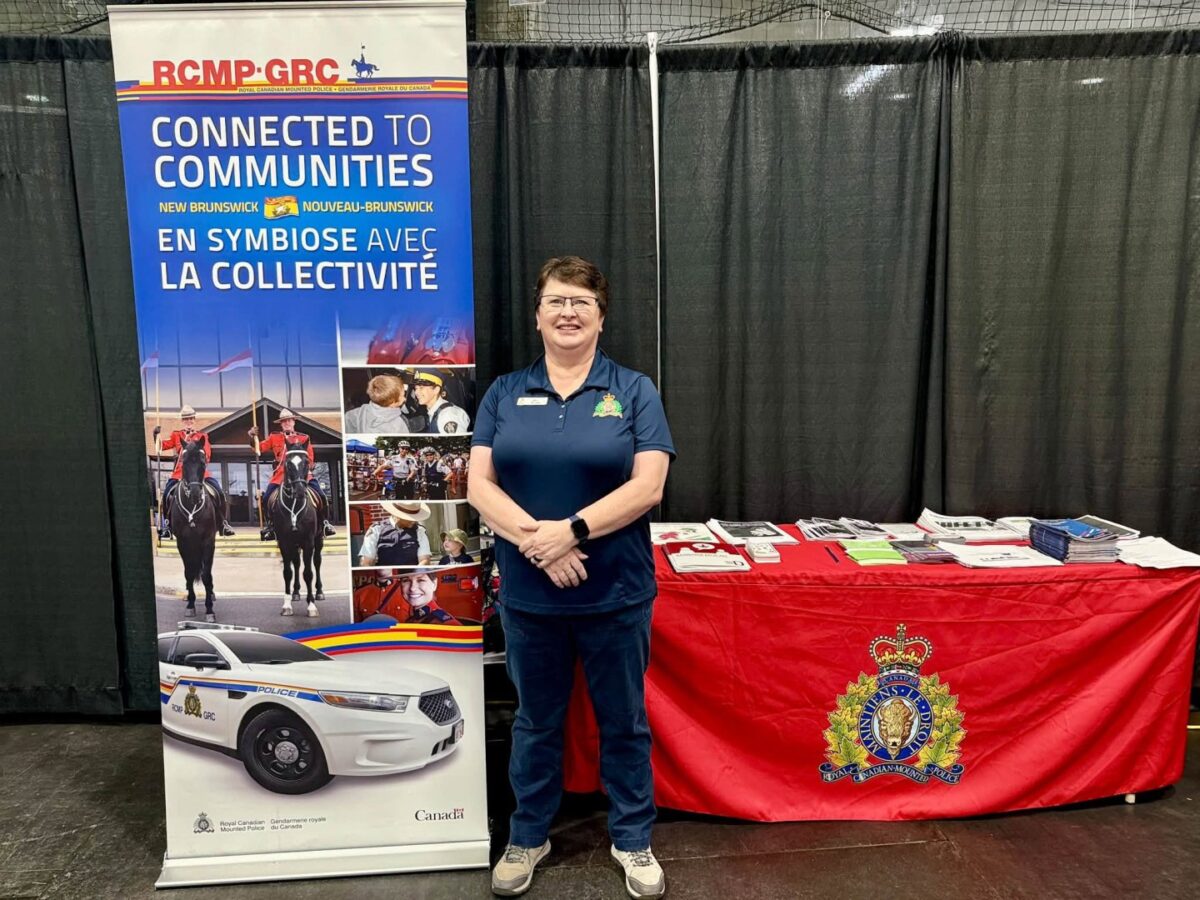
Those connections are especially timely as Passamaquoddy Lodge plans its replacement facility. The province announced in March that the existing 60-bed Saint Andrews nursing home would be among six facilities replaced under New Brunswick’s long-term care plan.
Davies said the new lodge is being designed as a community hub that supports aging in place, with childcare incorporated into the facility to bring different generations together.
Smith, president of the foundation’s board, said the fair introduced him to organizations he had not known existed, as well as potential partners who could help inform the new lodge’s development.
“You realize that there are a lot of partners that we can and should bring along as we build,” he said.
For Frank Ferguson, a volunteer for Charlotte Dial-A-Ride, it was an opportunity to recruit more volunteer drivers who are needed for the nonprofit.
“It takes a village,” he said.
Organizers intend to make the Empowerment Fair an annual event and are gathering feedback from residents and exhibitors about what worked and what could be improved. After seeing the demand for health information and community connections firsthand, Ruckstuhl suggested it could happen even more often.
“This shouldn’t be a yearly thing,” she said. “It should almost be a twice-yearly thing, just to help people get the tools and resources they need.”