


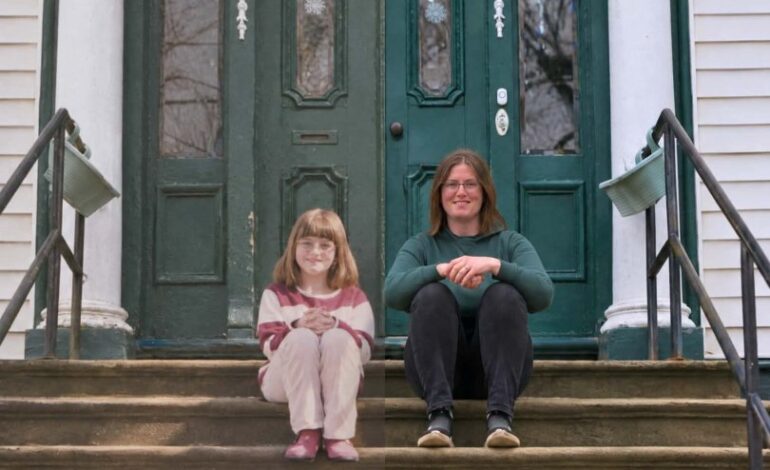
For Jessica Gallant, support for youth in care should have no expiry date.
Gallant, a Saint John resident, a New Brunswick Representative for the National Council of Youth in Care Advocates and was in the care of the Department of Social Development before aging out of the system.
“To me, no expiry date means that support shouldn’t completely disappear when someone reaches a certain age,” she said. “Like [being] 21 years old doesn’t magically make someone independent or prepared for adulthood.”
She said most young people can rely on family for advice, financial support or a place to stay, which is not always available to children who have aged out of the child welfare system.
“I just don’t think that like supports should fall off the face of the earth when you hit a certain age because that’s beyond your control,” Gallant said.
Eligibility for the Child and Youth Protection Program ends at age 19, while other government programs supporting youth aging out of the child welfare system extend to age 26.
Gallant said having someone consistently in her corner would be the most valuable support.
“Maybe having a social worker to help find employment, education opportunities,” she said. “Navigating adulthood can be really overwhelming when you don’t have family support to fall back on.”
She said having a place to turn to for support and guidance would have reduced a lot of stress for her and other young people leaving care.
“Many young people nowadays leave care before they have the opportunity to build those foundations,” Gallant said. “So the end of care doesn’t mean someone is prepared to navigate housing, employment, finances, education and personal challenges completely on their own.”
Gallant wants ongoing access to mentors and mental health support.
“Belonging means that you feel connected to people and the communities that generally care about your well-being,” she said. “And not feeling you’re alone once you age out of care.”
Wocawson (Austin) Francis is from Wolastoqiyik Neqotkuk (Tobique) First Nation. He said someone checked on him during his first six months of living alone after leaving the child welfare system.
“That was kind of alright,” he said. “I am Indigenous and once I aged out I would receive a land claim.”
Francis said he was encouraged to spend the money but received no education on how to manage his finances.
“Not too long after that I was set up with a house,” he said. “I got that all on my own, but eventually due to a lack of being able to manage my own money I ended up losing the place.”
Francis subsequently lived in his car with his dog and he said he was advised to “just get a job.”
“I was like, ‘I don’t have a permanent address. Places won’t take me,’” he said, adding he wanted a place that was also pet-friendly.
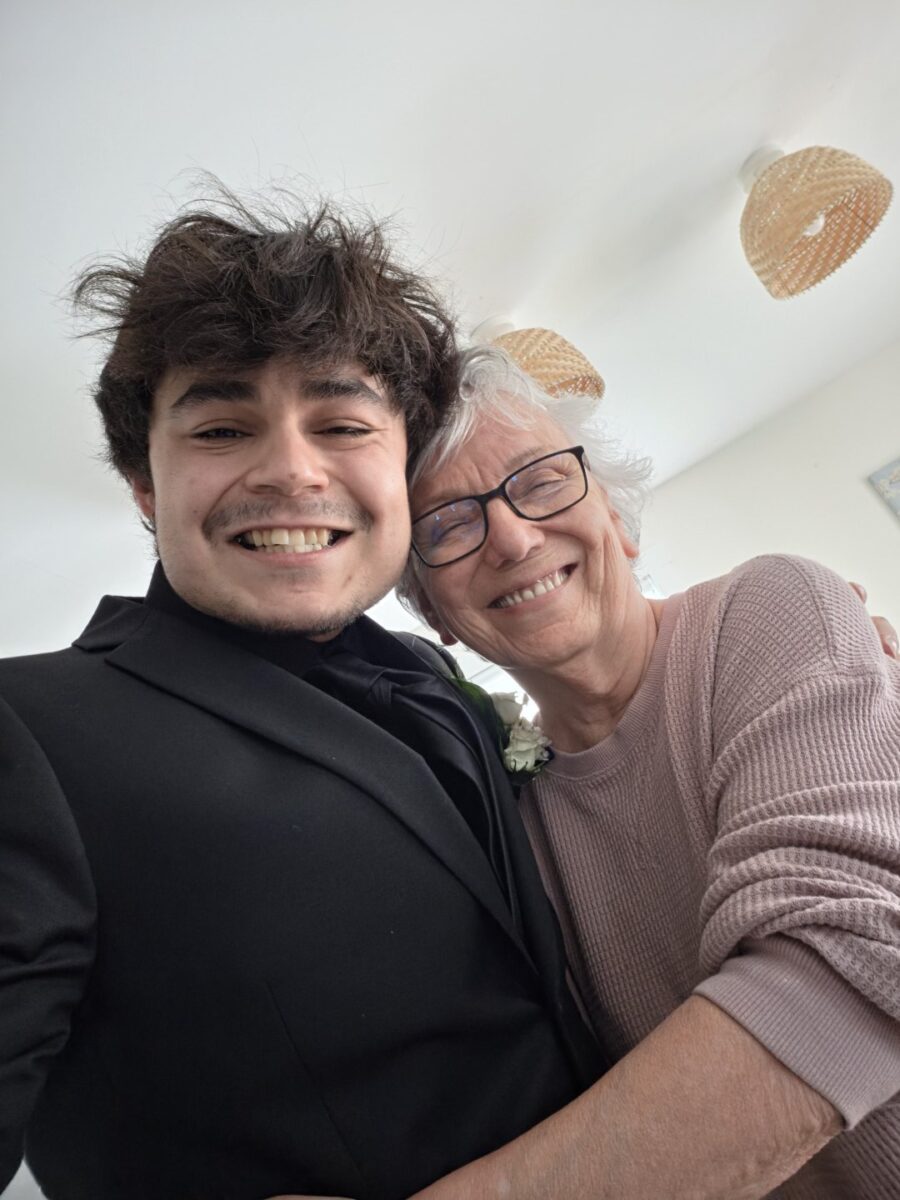
Francis said he ended up rehoming his dog.
“I was kind of ridiculed by the people who were supposed to support me on the way out,” Francis said.
He would like to see an independent body conduct audits of organizations responsible for caring for Indigenous youth. He said he felt helpless.
He said he would like a grace period to allow for mistakes.
“With more financial literacy support, trying to pay for and insure a car, raising a dog, going to school and getting meaningful and impactful jobs,” he said. “Not necessarily a mentor because that feels infantilizing but an advocate that is empowering.”
He said some legislation and protocols were developed by government bodies that lack an understanding of trauma and its impacts.
“Sometimes it may take people to get past 25 [years old], some people may have to put aside a part of their lives to raise a child or take care of a dependent,” Francis said. “Care shouldn’t stop at a convenient landmark for these governing bodies and there should be a more thorough analysis and advocation as well as external perspectives on cases.”
There was also not a lot of cultural support, he explained. His grandmother is Opolahsomuwehs (Dr. Imelda Perley), a respected Wolastoqey Elder and knowledge keeper in New Brunswick.
“She’s an amazing woman but that’s where my cultural experience comes from,” he said. “We had people who knew nothing about smudging. You can’t just have Joe Schmo from the sidewalk smudging youth.”
Culturally, Francis said, he felt abandoned. He also felt unprepared for adulthood when he left care.
Francis also wants ongoing access to advocacy and mental health support.
“It would be nice to have support continuing because sons and daughters don’t age out of their parents.”
The report, titled Nothing to Celebrate: The Crisis of Youth Aging Out of Care, called for significant reforms to address the risks of homelessness, substance use and involvement with the criminal justice system among young people leaving care.
The committee released a report in December 2025.
Its findings called for significant reform to ensure vulnerable young adults are not abandoned to crime, addiction or homelessness.
The committee made several recommendations, including a national child and youth commissioner, a framework to implement human rights commitments, a national database tracking provincial and territorial agreements with anonymized data, wraparound supports for youth aging out of care, citizenship support, a national summit and action plan, support for LGBTQ children and youth and support for families.
There is little data on the number of Indigenous children in the child welfare system in New Brunswick, but estimates suggest they represent about 30 per cent of children in care. According to Statistics Canada in 2021, Indigenous children made up 7.7 per cent of children under age 15 but 53.8 per cent of children in foster care.
Social Development Minister Cindy Miles said New Brunswick is one of only two provinces and one territory participating in the Equitable Standards Evaluation Model Pilot Project.
The ESEM pilot project is a set of standards for organizations and governments designed by Dr. Melanie Doucet and the National Council of Youth in Care Advocates to conditions for former youth in care to succeed.
“The biggest part of this is we’re going to release the action plan by the end of 2026,” she said. “They put in an equitable standards action plan and I’ve instructed the team that we’re also going to share our evaluations as well.”
When asked how she reconciles age cutoffs with the government’s commitment to equitable standards, Miles said she recognizes that everyone experiences life differently.
“We’re now supporting folks to 26, and that doesn’t have to be just financial; there is also the employment and education piece that comes from that,” she said.
“It would be nice to have support continuing because sons and daughters don’t age out of their parents.”
Miles did not directly address whether the department would consider continued support based on individual need instead of age.
She said the government would work within the framework of the Child and Youth Well-Being Act to guide its approach but said the department would put “everything on the table.”
Miles said the department remains in regular communication with First Nations regarding Jordan’s Principle.
Jordan’s Principle is a child-first principle intended to ensure First Nations children can access the public services they need without experiencing gaps, delays or denials.
“I’m a voice at the table of federal partners that we are not the only province that is challenged with how Jordan’s Principle is rolling out across the country,” she said. “I’ve asked for in-person meetings with our federal, provincial and territorial counterparts to be able to have a more in-depth conversation there.”
She said she has told any Indigenous organization or frontline support worker that they can reach out if they see or feel a child is falling through the cracks.
“There is no easy answer, but we continue to work with our partners and always with a rights-based lens,” Miles said.
But for Gallant and Francis, the request is simple: support that does not expire at a predetermined age.
“I think there should be an understanding that humans aren’t one-size-fits-all,” Francis said.
This story was produced as part of Spotlight: Child Welfare, a collaborative journalism project. It was first published by CHCO-TV and The Courier. It was reviewed by lived/living expert Justin Pothier. Tell us what you think about the story here.