


SERIES OVERVIEW
Civility is usually discussed as a set of rules, manners, or expectations imposed on behavior. But historically, civility emerged much earlier and much more naturally — through shared cultural practices that required cooperation, restraint, emotional awareness, and mutual respect.
This three-part series explores how music, the arts, and cooking and dining together have quietly shaped civil societies across cultures and generations. Each essay stands alone, yet together they reveal a simple truth: civility is learned through participation, not instruction.
The series avoids politics and ideology, focusing instead on universally recognized human activities that transcend differences and foster social stability.
PART II: Why the Arts Matter to Civility — Especially for Young People
If music teaches us how to listen, the arts teach us how to see—both ourselves and one another.
Civility relies on this ability more than we realize. A civil society needs people who recognize emotions without being controlled by them, who express disagreement without dehumanizing, and who turn inner experience into shared understanding. This is exactly the work of the arts.
For generations, visual and dramatic arts have provided structured spaces to safely and responsibly explore difficult feelings—fear, anger, grief, confusion, joy. Paintings, drawings, scripts, and performances act as bridges, allowing emotion to move through a person rather than erupt from them.
This distinction matters.
Without an outlet, emotion often emerges as aggression, withdrawal, or dysfunction. With form—image, movement, or story, it becomes something to examine, discuss, and understand. The arts don’t ask young people to suppress feelings. They ask them to work with them.
In a studio, a young person learns that a rough first draft is not a failure—it is a starting point. In theatre, a student learns to inhabit another perspective, sometimes radically different from their own. In both settings, discipline and freedom coexist. Expression is encouraged, but within boundaries that enable collaboration.
This balance is where civility is born.
Dramatic arts develop empathy in a way few other disciplines can. To play a role is to suspend judgment and step into another’s experience. The actor must ask: What motivates this character? What fears drive them? What wounds shape their choices? These are precisely the questions civil society needs its citizens to ask—on stage and off.
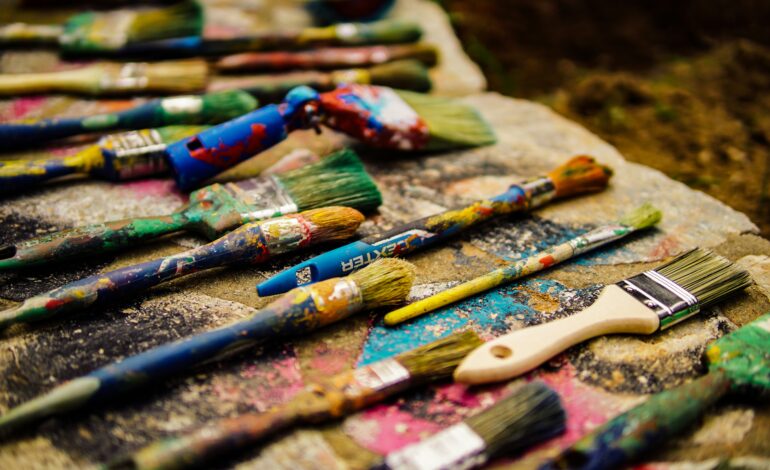
Visual arts offer a different but equally important gift. They create space for reflection without immediate explanation. A drawing or painting does not need agreement; it invites imagination. Viewers are asked not to react, but to observe. This pause—this moment of looking rather than responding—is increasingly rare and deeply civilizing.
For many young people, especially those facing stress, instability, or trauma, the arts may be the only place where their inner world is taken seriously. There, it is not judged or policed. This does not make the arts indulgent. It makes them stabilize.
We often talk about resilience as though it appears fully formed. It must be cultivated. The arts help young people gain emotional literacy: the ability to name feelings, tolerate complexity, and communicate meaningfully. These skills extend to relationships, workplaces, and communities.
Importantly, the arts accomplish this without singling anyone out. No labels are required. No personal disclosures are demanded. Participation alone is enough.
Like music, the arts operate across cultures and languages. A performance, a sculpture, or a painting can communicate what words cannot. This universality gives the arts a rare power: they humanize without argument.
If we want more civil public spaces tomorrow, we must notice what we offer young people today. Environments that honor expression and teach responsibility aren’t luxuries. They’re investments in social stability.
We teach civility not by silencing emotion, but rather by giving emotion a voice.
Now is the time to champion the arts for the sake of civility, resilience, and a more humane society. Let us act—so the next generation learns to build, not break, the bonds between us.
SHORT EDITOR’S NOTE
At a time when public discussion about civility often becomes political or moralistic, this series takes a different approach.
Rather than arguing about who is right or wrong, or proposing new rules for behavior, the essays that follow ask a quieter question: How did human beings originally learn to live together at all?
The author suggests that civility did not begin as an abstract idea or a formal code, but as a lived skill developed through shared cultural experiences — making music, creating art, and gathering around the table. These practices appear in every culture, across history, and require no agreement beyond participation.
Readers skeptical of “soft solutions” may be surprised to find that the essay series is not about nostalgia or sentimentality. It is about practical human behaviors that teach listening, emotional regulation, responsibility, and cooperation — the very capacities modern societies say they want, yet they struggle to cultivate.
Whether one agrees or not, the series invites reflection on something often overlooked: before we tried to manage civility, we practiced it — together.
 Jay Remer was raised in the United States and emigrated to Canada roughly 30 years ago. Since then, I have been involved in the writers’ community and the hospitality industry. I live in Saint Andrews, NB, and look forward to the day when healthy, civil debates bear more compassionate outcomes. Please feel free to send your questions: jayremer@chco.tv


