


By Brian Owens
Reporter
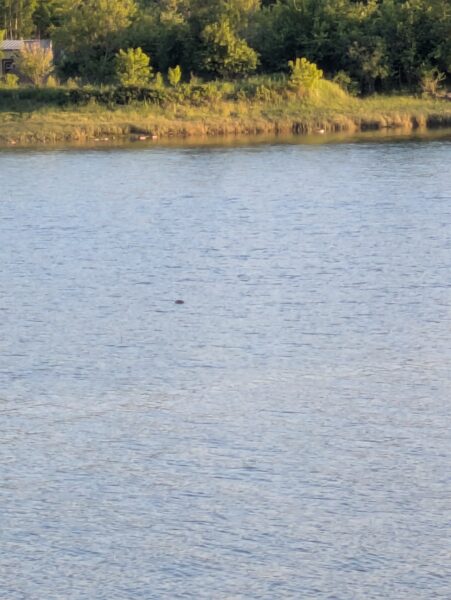
On a sunny evening at the end of June, a trio of harbour seals made their way up the St. Croix River all the way to St. Stephen, gorging themselves on the flood of alewives that were heading back out to sea after spawning.
The sight of their smooth dark heads bobbing in the middle of the current, which delighted residents strolling along the riverfront walking path, was common in the past but became exceedingly rare in recent decades. Poor water quality and barriers to fish passage further upstream meant the river could only support small and fragile populations of fish and other animals.
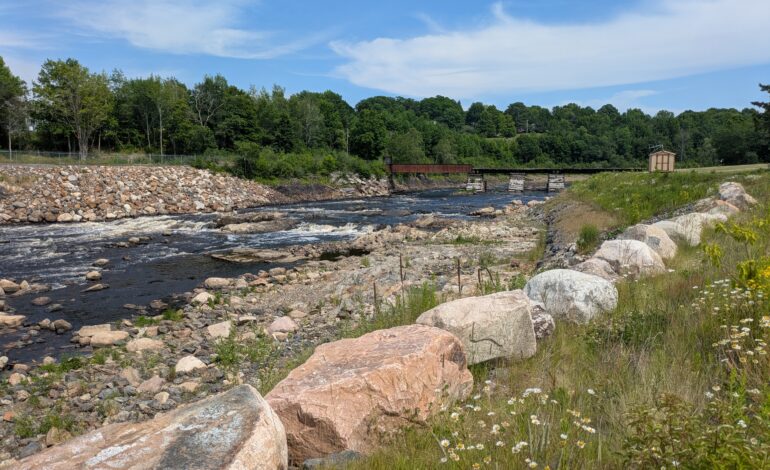
But concerted efforts to restore the river’s ecosystem, including upgrades to sewer and stormwater systems in both St. Stephen and Calais in recent years, and especially, the removal of the Milltown Dam in 2023 are beginning to show results, with life of all kinds rapidly returning to the river.
“We’ve seen an increase in cormorants and eagles, as well as different fish species too,” Alexa Meyer, conservation manager for the Passamaquoddy Recognition Group Inc. (PRGI), said. “We’re starting to see different fish coming back up again, including sturgeon, which we’d never seen until the dam came out.”
She encourages residents to keep an eye out for rare or unusual wildlife while enjoying the river, and report sightings to PRGI.
“Community sightings and community knowledge are important data points for us,” she said. “Those visual changes mean something is working.”
A solid foundation
For Matt Abbott, the Fundy Baykeeper and marine program director for the Conservation Council of New Brunswick, the river’s recovery feels like a personal vindication after years of hard work alongside other local conservationists and Indigenous groups.
“The river restoration campaign started as a big fight against the State of Maine to open fishways, which felt like an uphill battle,” he said. “But momentum gained and now it feels like there’s a real movement happening. Every year since the fishways opened and the dam came out you start seeing little hints, like those seals.”
Most restoration efforts focused on boosting the population of alewives, also known as gaspereau or river herring, a keystone species whose presence supports the rest of the ecosystem. The Peskotomuhkati word for alewife, “siqonomeq”, translates as “spring fish” and is sometimes referred to as “the fish that feeds all”.
“Once you have a healthy alewife run, other things become possible,” Abbott said.
The St. Croix River once supported huge numbers of alewives: 2.5 million fish were counted in 1987 at Milltown. But the population crashed after Maine closed several fishways in 1995 to protect the sport fishery for smallmouth bass, with just 900 fish recorded in 2002. After the fishways started to reopen in 2008 the population slowly began to recover, with more than 840,000 seen in 2023, the dam’s last year of operation.
Neal Berry, executive director of the St. Croix International Waterway Commission (SCIWC), said the number of alewives seen at the Woodland dam further up the river has drastically increased since the Milltown dam was removed. In 2023 around 200,000 fish were counted at Woodland, Maine while 610,000 were seen the following year.
The next stage in the river’s recovery consists of two big projects to improve and modernize the dilapidated fish passages at the dams at Woodland and Grand Falls which are underway now. When they are completed in the next few years, Berry expects the alewife to undergo another population boom.
“We’re in a better spot than we were 25 years ago in terms of water quality and ecosystem health,” Berry said. “But there are always improvements to be made.”
Reconnecting with the river
It is not just the fish, birds, and seals that benefit from a healthier river. Although they are quite bony, alewives are tasty fish to eat, especially when smoked. Meyer said the dam’s removal and the river’s recovery also provide an opportunity for people to reconnect and identify with the river, which has held a central place in the community since time immemorial.
“I’ve noticed every time I go down there there’s more and more people sitting and relaxing,” Meyer said. “It’s great to see a place where the community can come together and enjoy nature right in Milltown.”
Abbott has held several events with students from Milltown Elementary School, sitting around a fire beside Salmon Falls in the winter drinking hot chocolate, talking about the river, the alewives and other species that call it home.
“I became aware of the cultural restoration that goes hand-in-hand with the ecological restoration,” he said. “Before we had heavy logging and dams on the river, people’s sense of identity was very tied to the river, and I think we can have that again.”


1 Comment
Love the article however it does contain some misinformation. Seals have been coming up the St Croix River for years. I started working on Customs at Ferry Point Bridge in 1974. In those days, the seals would come up river with the incoming tide following whatever species happened to be running (smelt, alewives, striped bass). They would often take a rest on the grassy area on the US side behind what used to be the duty free pickup. They would then travel back down river with the ebb tide.
I was born in 1952 & raised in St Stephen and spent almost all of my time practically within sight of the River and spent lots of time on the water. I have fished striped bass above the rapids at the Cove, dipped smelt in the spring at the Cove, hunted ducks in Baring Bay. I can recall putting our boat in at St Stephen and seeing human feces & toilet paper floating by. Also sitting in the booth at Customs and seeing raw sewage coming out of a pipe in the riverbank just above Riverside Grocery. Without exageration, you could tell when someone was doing laundry or a #2. We have certainly come a long way and it is a joy to really enjoy what the River has to offer.