

The emergence of more giant hogweed in New Brunswick is cause for concern for the New Brunswick Invasive Species Council (NBISC) due to its harmful effects on humans and animals.
It is an invasive perennial plant that can be harmful to people and pets when touched due to a sap it produces, which makes individuals and animals more permanently susceptible to sunburn.
Clarissa Hoffman with NBISC said the plant can have lasting effects on skin health, even years after the burn has healed.
“It is a danger to human health and also to animals, because they can also be susceptible to burns,” said Hoffman. “If you get the sap on your skin and then it’s exposed to sunlight, you can get third-degree burns.”
According to the Government of New Brunswick (GNB), the effects of its clear sap include skin inflammation, a burn and a rash (photodermatitis) and, if exposed to the eye, the sap can cause temporary blindness. This can happen after the sap is on the skin and exposed to sunlight.
Hoffman said if the sap gets on an individual’s skin, they should protect the affected areas from sunlight immediately. She said the next step is to wash the skin with soap and water. If a reaction is present, get medical attention.
If the sap enters into the eye, wash it out immediately with cool water and go to the emergency room.
She said pets are less susceptible to the plant’s burns because of their protective layer of fur. Though, it is best to take the pet to the veterinarian if a rash is present.
Some plants in New Brunswick are similar to giant hogweed. However, they do not have the same effects because those plants contain fewer toxins according to the NBISC.
Similar plants include cow parsnip, angelica, wild parsnip, and valerian, according to GNB.
How to identify giant hogweed
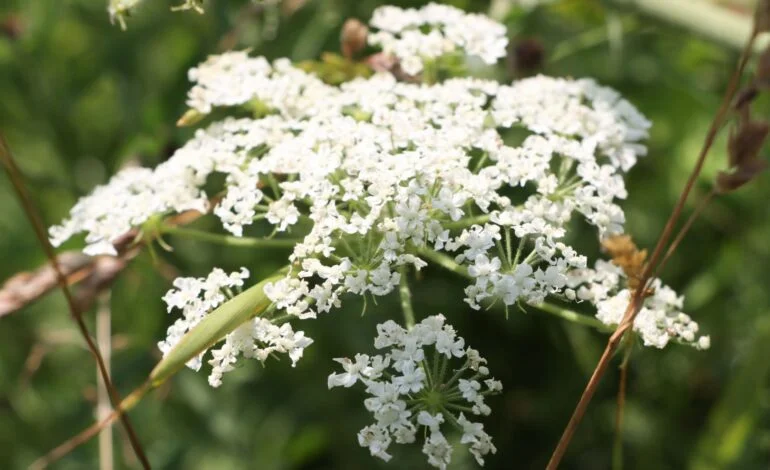
According to Public Health, the hollow stem of giant hogweed (Heracleum mantegazzianum) is very bristly, with purple spots or blotches.
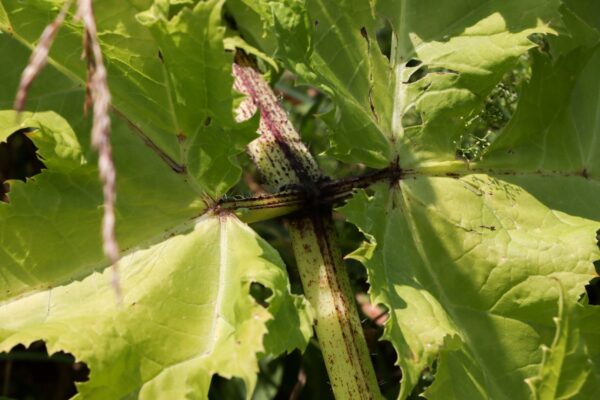
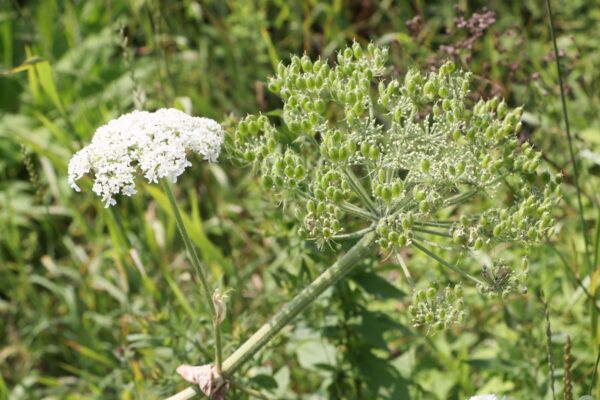
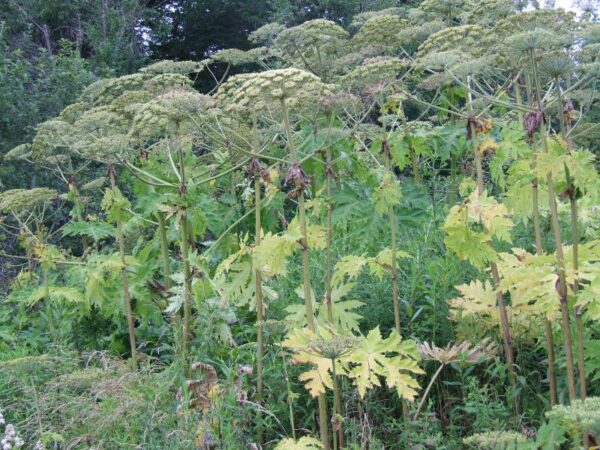
When it is fully grown, it can grow between 1.5 metres to 5 metres tall. Its shiny and serrated leaves can be between 1.5 metres wide and 3 metres long, with white flowers clustered in the shape of umbrellas up to 1.5 metres in diameter.
Cow parsnip (Heracleum maximum) is a native species in New Brunswick. The main difference from its giant relative is its height; cow parsnip is typically 1 to 3 metres tall with leaves that are smaller and less serrated.
It generally causes less extreme symptoms than giant hogweed, but is still capable of producing a painful rash (dermatitis).
Angelica (Angelica sylvestris) is typically 1 to 2.5 metres tall, and are invasive much like giant hogweed. The main difference between the two is the smaller size of angelica’s flower heads.
Wild parsnip (Pastinaca sativa) is typically much shorter, ranging from 0.5 to 1.5 metres. The plant is much more branched than its relatives and has distinct yellow flowers. It can cause a reaction much like poison ivy, and is more likely to impact those with sensitive skin.
Valerian (Valeriana officinalis) grows from 1 to 2 metres. The leaves are clustered and the flowers are white to purple in colour. Public Health said the easiest way to identify this plant is with its seeds, which look almost like dandelion seeds. Valerian is highly invasive in New Brunswick.
How did giant hogweed get here?
Giant hogweed is a growing problem in the Saint Andrews area, according to the NBISC.
Hoffman said it was originally introduced to New Brunswick as an ornamental plant in someone’s garden.
“That’s how most invasive plants arrived in North America,” Hoffman said.
She said the best time to deal with the plant is in April and May, while the ground is soft and the plant is not producing seeds.
However, she warned to be careful when dealing with the plant by wearing full protection and not to get any of the sap near the face or on the skin.
She said the dangerous sap is produced throughout the plant.
“It’s going to be throughout the stems. It’s even in the leaves,” she said. “So if you brush against the leaves you can get that skin reaction.”