

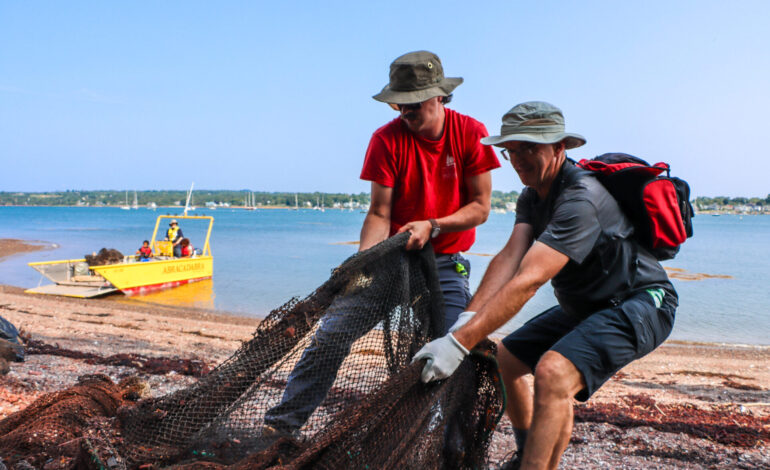
The Great Fundy Coastal Cleanup (GFCC) is a province-wide event held by the Nature Trust of New Brunswick (NTNB), which organizes cleanups at beaches across the province.
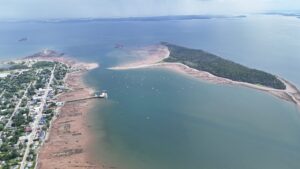
The organization is still looking for volunteers to take part in this year’s event on Aug. 29. Specifically, it is looking for people to attend the cleanup on Navy Island, just across from Saint Andrews.
Jon MacNeill, the communications and engagement manager of the NTNB, said the annual event has been the organization’s marquee tradition over the last decade.
“The idea is for one day, we get as many volunteers as possible to hit as many coastal sites as possible to remove as much marine debris, consumer waste and plastic pollution from these sensitive habitats as possible,” MacNeill said.
He said the event provides an opportunity for people to get out to locations that might not be accessible all the time and clean them at the same time.
In the last 10 years, the organization has removed more than 180,000 pounds of garbage across roughly 160 kilometers along the Bay of Fundy coastline, MacNeill said.
“We’ve had about 2,000 big black garbage bags or big feed bags of waste hauled off these beaches,” MacNeill said. “Usually every year we can haul from 150 of those big bags to 200 bags.”
He said a lot of the waste collected from shorelines is a product of industrial activity.
“A lot of that comes from the salmon aquaculture industry,” MacNeill said. “We’re talking big 10-metre stretches of PVC pipes. We have to get out there with saws and break them down into pieces that are manageable to haul away.”
MacNeill said they also haul out big chunks of Styrofoam.
“Some of them are like two to three times the size of me, all the way down to just little pebbles, which are actually the worst to try to gather,” MacNeill said.
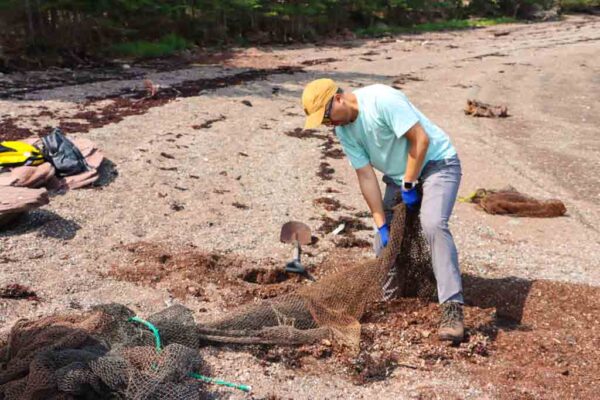
The hardest kind of waste to get off shorelines is large pieces of fishing net because they are often buried under the sand, according to MacNeill.
“But if you’re up for the challenge, it’s really rewarding when you can get that big hunk of net out there and remove it from the environment,” he said.
He said Navy Island always has a lot of netting buried in its sand, and the NTNB needs as many volunteers as possible for that site.
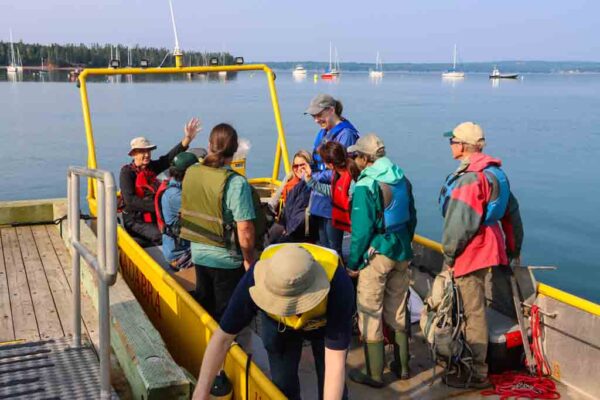
“We’ve got a great partnership with Matt Abbott at the Conservation Council in New Brunswick,” MacNeill said. “This year, he said he’s willing to just traffic people over there, as often as he needs to. So we really don’t have a limit for that site.”
When the organization finishes the cleanup, it records the types of waste that are removed from each site, and over the years MacNeill has seen changes in the cleanliness of the province’s coastlines.
He said plastic straws are almost a thing of the past for beaches in New Brunswick.
“It matters a lot because we send all that data to a global database that tracks waste and debris across ocean sites all over the world,” MacNeill said. “Decision makers and conservation groups like ours, we use that to help inform our decisions in the conservation measures that we’re putting in place.”
MacNeill said when someone is on the ground removing debris, they might take a bit more care during their daily lives.
“Once you experience something like Navy Island, like on the ground, you can’t help but make a connection with it, and then you’re going to want to see it protected,” MacNeill said.
Visit the NTNB’s website to register for the Great Fundy Coastal Cleanup on Navy Island.