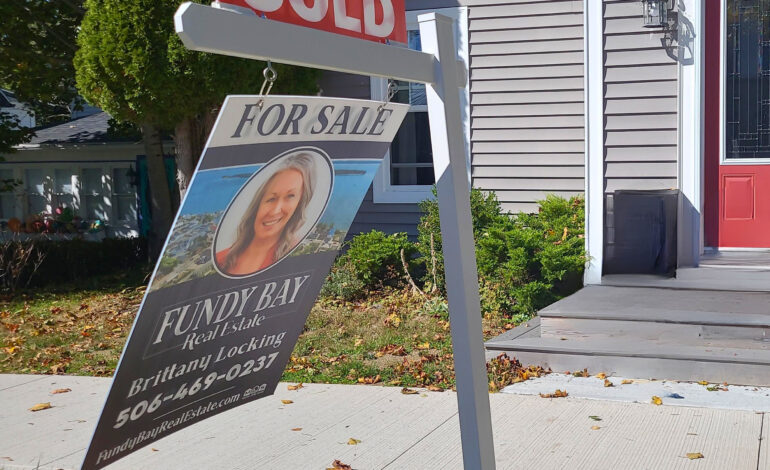



The executive director of the New Brunswick Non-Profit Housing Association says the waitlist for non-profit housing is at 14,000 — almost three times the number pre-pandemic.
Peter Corbyn said the destabilized economy, the global pandemic and the housing market have not helped ease the burden for those living in low- to middle-income households.
“Another large issue that I’ve seen first-hand is investors coming to New Brunswick in 2021, 2022, 2023 and looking at a 10, 20 or 30-unit apartment building in any given place in the province, saying I’d like to invest in that because I see an opportunity financially. They put on a coat of paint and do a couple other little things and the rent goes from $750 to $1,300 a month.”
He said private investors are a needed piece of the puzzle, but they need a return on their investment. Corbyn said many have explored turning those private developments over to the non-profit sector.
“We need to grow the sector,” he said. “That’s one piece of it. It is to grow the non-profit sector.”
Corbyn said there are positive social and economic benefits to housing individuals, especially those in the low-income bracket. He said the province is doing a lot of work to increase the housing stock.
“We’ve got a long way to go,” he said.
The provincial government has prioritized building more non-profit public housing during its four-year mandate.
The Liberal government has set a target of 1,760 affordable housing units by 2028.
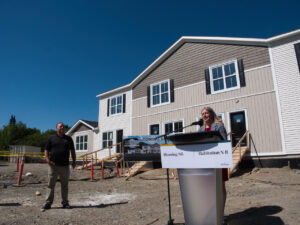
According to a statement by the New Brunswick Housing Corporation, it has opened or acquired 210 public housing units since re-establishing Housing NB in 2023.
“We currently have 91 public housing units under construction or in the tender phase, and we have an additional 139 units in the design phase of construction,” the statement said.
The province allocated $7.4 million for transitional housing. The department said it has opened 101 supportive housing units since the fall of 2025, with up to 49 more units in development.
“Beyond that, we signed an agreement with Build Canada Homes to build 1,200 more affordable housing units over the next two years, with the first projects receiving conditional approval this summer. We expect to have more to share on those projects in the near future,” the statement said.
The department said Minister David Hickey has met with several municipalities recently from Dieppe to Belle Baie and St. Stephen to Fredericton.
“We know it’s going to take time to change directions after decades of inaction,” the statement said. “But we are laser-focused on improving conditions for market activity, which is why we removed the 15 per cent tax on multi-unit builds, and we have introduced measures like the rent cap to protect tenants from year-over-year rental surges. We’ve had some of the busiest years in housing starts in our province’s history, and we know we need to work closely with community partners to ensure everyone has access to safe, affordable places to live.”
In June 2026, the provincial government extended the rent cap for 2027. Landlords can apply for higher increases, up to 9 per cent, for approval by the Residential Tenancies Tribunal.
The New Brunswick Housing Corporation said it does not foresee the rent cap going away anytime soon.
“We don’t see any evidence that the rent cap has slowed developers in New Brunswick,” the statement said. “On the contrary, last year we set a record for the most housing starts in our province’s history — breaking a record previously set in the 1970s.”
The province also hopes to reduce the level of homelessness by 40 per cent by the end of its mandate.
Corbyn said there is one thing he wants to drive home for people who are unhoused.
“Those people living outside, they didn’t choose that life,” he said. “The work that we’re doing as an association is making sure they never end up there in the first place.”