

There may be no number in real estate that gets more attention than the one attached to the listing.
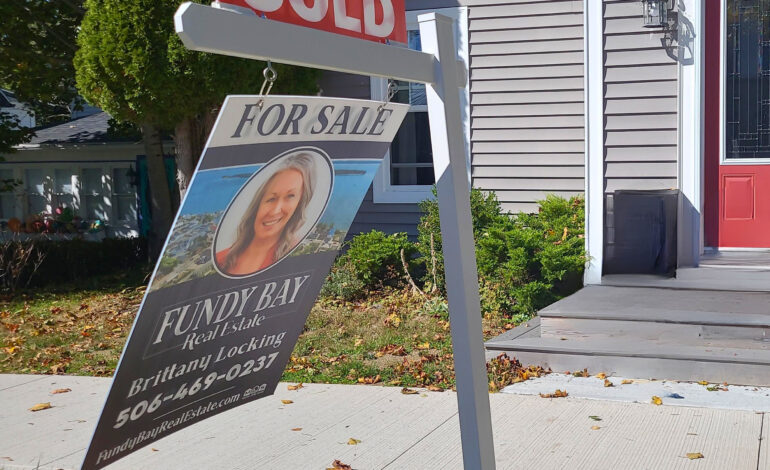
We compare it to the house down the road. We do a little mental math. And when the SOLD sign eventually goes up, we all want to know the same thing: What did they get for it?
This month’s column was inspired by conversations I’ve been having with some first-time homebuyers. Like many people entering the market, they’re learning that the number beside a listing isn’t necessarily what a home is worth; it’s where the conversation begins.
Asking price, market value, and sale price can be three very different numbers.
The asking price is exactly that: the price a seller is asking for their property. Ideally, it’s supported by recent sales, comparable properties, location, condition, and current market activity. But ultimately, it is still an asking price.
Market value is different. It’s an informed estimate of what a property is likely to sell for under current market conditions.
And the final sale price? That’s where the market actually lands: the amount a buyer is prepared to pay and a seller is prepared to accept.
That distinction matters, particularly in today’s market.
According to CREA’s monthly market reports, homes sold in Charlotte County over the past few months have generally sold in the mid-90% range of their listed price.
At first glance, that might sound like sellers are giving up several percentage points of their home’s value.
But that’s not necessarily what those numbers are telling us.
A home selling below its asking price doesn’t automatically mean it sold below market value. If a property is listed at $475,000 but the market supports a value closer to $450,000, a sale near $450,000 isn’t necessarily a $25,000 discount. The asking price and the home’s market value simply weren’t the same number.
The opposite is worth considering, too. Pricing a home too high can work against a seller. Buyers may overlook the property altogether, particularly when they have other options to compare it to. Pricing a home in line with the market from the beginning doesn’t guarantee a quick sale, especially in a market like Charlotte County, but it can help make sure the right buyers don’t dismiss it before ever walking through the door.
And that brings us back to why selling below asking isn’t unusual in Charlotte County. Buyers today generally have more choice and more time to decide what a particular property is worth to them. Sellers, in turn, are deciding what they’re willing to accept.
That’s negotiation, and in a more balanced market, the gap between asking price and sale price is another reminder that no single number tells the whole story.
Sometimes, reading between the listings means looking beyond the number on the sign and understanding what it’s actually telling us.
 Brittany Locking is a REALTOR® with Fundy Bay Real Estate, specializing in the Charlotte County market. She began her real estate career in the Greater Toronto Area before becoming a licensed REALTOR®, and later relocating to St. Andrews in 2017 after a visit that quickly turned into a love for the town, its pace of life, and the natural beauty of Charlotte County. Brittany lives locally with her husband, son, and two dogs and is passionate about giving back through her community initiative, Give Where You Live. She believes that knowledge is power and aims to help readers feel informed and confident about the local real estate market.