


A new annual report from the Local Governance Commission says local governments have largely been left on their own following local governance reform, despite requests for guidance from the provincial government.
Five recommendations were made to New Brunswick’s Local Government Minister, Aaron Kennedy.
Commission chair Giselle Goguen said in the report the LGC believes it is unclear whether local government leaders and others receive sufficient information from the department allowing them to understand and meet their legislative obligations.
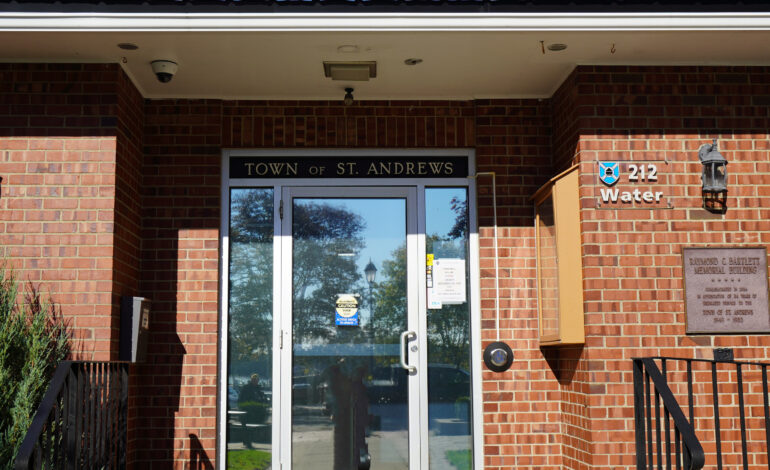
The report pointed to the Town of Saint Andrews which requested help interpreting legislation around the requirements for code of conduct bylaws.
Councils across the province were advised last year they could not hold discussions around code of conduct or conflict of interest complaints in closed session. Many moved to change the associated bylaws.
Goguen cited in the report an article by The Courier from February 2026.
At the time, the Department of Local Government told The Courier that local governments were independent levels of government that are responsible for the development and implementation of bylaws. It is each local government’s responsibility to determine the specifics of its process under its own bylaws.
“In fact, local governments are established by and operate under provincial legislation,” the report said. “The department further contended in its statement to the reporter that if legislative interpretation is required, local governments must seek independent legal advice.”
The report said this was not limited to Saint Andrews, noting a recent report from the Union of Municipalities of New Brunswick (UMNB) that also identified gaps in local government’s ability to get technical and professional support.
The commission’s report said its staff routinely hear from local government employees and elected officials who have been unable to obtain information.
“As the commission’s legislative mandate limits it to providing information on its own Act (Local Governance Commission Act), our four employees cannot step in for the department to answer these questions on its behalf.”
Dan Murphy, the executive director of UMNB, said the report reflects a lot of what the organization has been hearing from its membership.
He said the organization hears frequently from local governments unable to get guidance from the department.
“UMNB has received a lot of calls from communities, both staff and council, asking for interpretations of different matters,” he said. “We’re seeing it a lot and I think it has a lot to do with [the fact] we’ve got a lot of new folks in place.”
Murphy said in the past guidance had been provided.
“I don’t know why it doesn’t happen anymore … but it is certainly something we hear a lot at the office,” he said.
He said the organization is looking to understand whether the department is also adequately resourced — including funded properly.
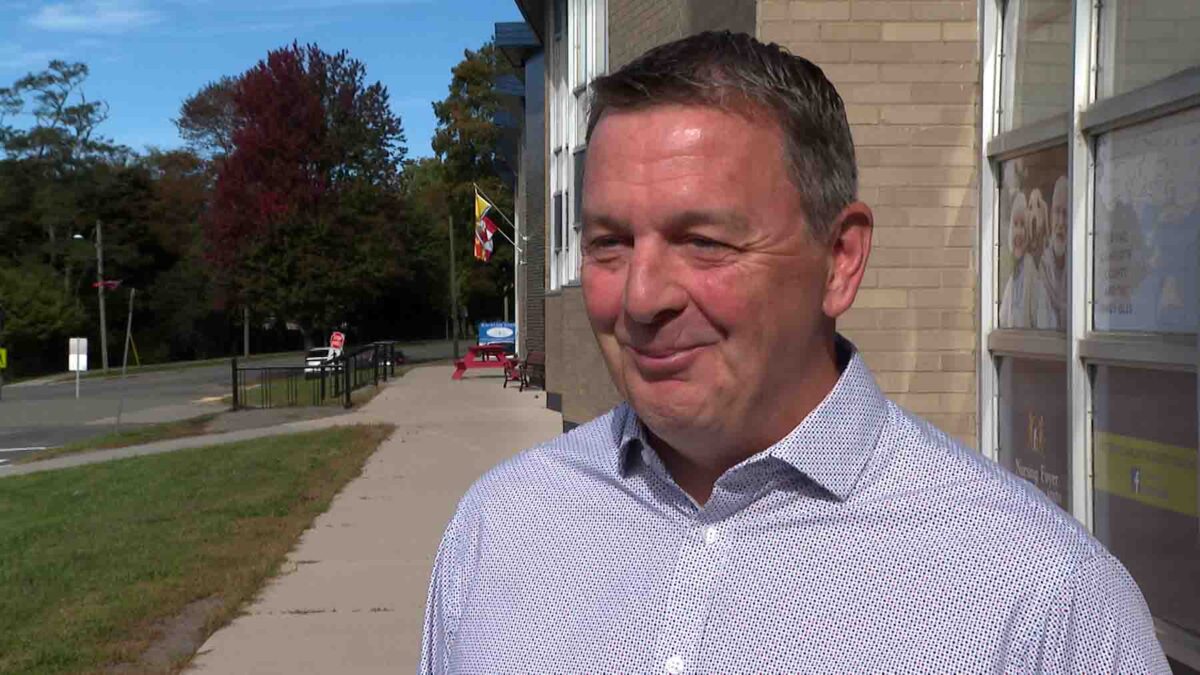
Murphy said he believes something more definitive from the department would be helpful in guiding municipalities so it can avoid being in violation of the Act in the future.
The Courier requested an interview with Minister Aaron Kennedy on the report but one was not provided.
“As the report was only recently released, the department will require time to review its contents before providing any further comment,” a statement said.
Saint Andrews Mayor Steve Neil said it was good to see the commission voicing some of the same concerns as many municipalities.
“It would be really nice if the province provided some sort of guidelines, some standardized guidelines for municipalities and how they deal with code of conduct violations,” he said.
He said when the commission first told councils they needed to hold discussions about code of conduct matters in open session, many were surprised, assuming they were doing it correctly.
Neil said he doesn’t think it is fair that taxpayers should bear the burden of legal cost either.
“I think this should be coming from the province,” he said. “We are governed by the province. We are set up by the province. I think they should be stepping forward and again providing that guidance for us.”
Under supervision
It also highlights three municipalities placed under supervision by the commission as evidence of the dysfunction and challenges faced by newly formed communities.
“This is not a coincidence, in the commission’s view,” the report said. “While the department consulted on reform during its development, local governments have been left largely to themselves when it comes to navigating the challenges that have inevitably followed.”
Strait Shores, Sunbury York-South and Miramichi River Valley were all under supervision prior to the general election held in May 2026.
According to the LGC, Greg Lutes was appointed to oversee Strait Shores at a cost of $111,759.84.
Two supervisors were appointed to Sunbury York-South, including Greg Lutes and Don Ferguson. The cost of both supervisiors was $164,606.71.
Finally, Brenda Knight was appointed to Miramichi River Valley at a cost of $112,253.16.
“All costs associated with the appointment of a supervisor are the responsibility of the local government, and the rate of pay for these expert individuals is commensurate with their level of experience and expertise,” the report said. “Therefore, the price for these services ranges between $150 and $200 per hour.”
A report by CBC New Brunswick said the cost for those supervisors was either double or triple that of normal elected officials.
Mandatory training
The commission also doubled down on a recommendation from its first annual report — mandatory training for elected officials and staff.
It said the department told Goguen in a letter in January it would not move forward with mandatory training.
“The minister further explained that the department would be focusing its efforts in the months prior to the general municipal election ‘to address the barriers which may have prevented elected officials from engaging with the training offered in partnership with municipal associations,’ ” the report said.
The report indicated the department’s own research showed it is the only Atlantic province without mandatory post-election training — and one of only four holdout provinces in the country.
“The time since the commission’s recommendation has provided further evidence of the value of mandatory training for elected officials and senior staff as they continue to navigate the challenges arising from local governance reform,” the report said.
“While the department consulted on reform during its development, local governments have been left largely to themselves when it comes to navigating the challenges that have inevitably followed.” – Local Governance Commission Report
Murphy said UMNB still supports mandatory training.
“I think part of the advantage of doing it mandatory is you guarantee equity in training,” he said.
He said different municipalities have varying levels of resources, but mandatory baseline training provided by the province with a set agenda provides everybody with the same information.
“The orientation was a success, but it doesn’t mean we can’t do better and be better,” he said.
Murphy said he hopes the department and the minister will work with the associations to bring these recommendations in action.
“The more we can support our folks in making sure they are making the right decisions up front, it will help them save the taxpayer money over the long run,” Murphy said.