

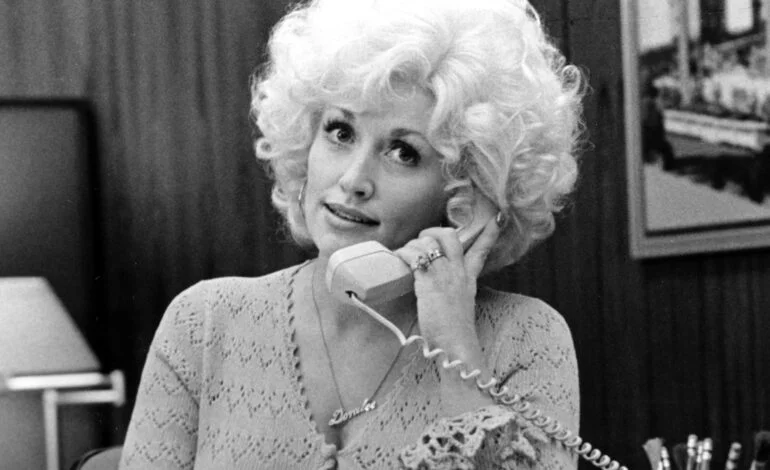
Today is Dolly Parton Day: Sept. 25, or 9/25, in honour of 9 to 5. It comes one month after her death. I knew losing Dolly Parton would hurt. I didn’t expect it to leave me wondering what I’m supposed to do next.
From the very beginning of her career, Dolly seemed to understand that people might underestimate a woman with big hair and long nails—and so she let them, right up until she owned the song, the publishing rights and the room.
Before I worked in news, I wrote about fashion and entertainment. I loved both forms of art: the work of making an image, telling a story and giving people something beautiful or surprising to carry into their lives. I also learned how quickly women could be judged for taking those things seriously. Glamour could make you visible, but it could also become the reason someone decided you had nothing serious to say.
Dolly was a guiding light through that contradiction. She never asked permission to look the way she wanted. She didn’t strip away the rhinestones to prove there was a thoughtful person underneath. The rhinestones were simply part of who she was — a beautifully complex and talented woman who was born to shine, literally and figuratively.
That matters when even people who call themselves progressive can be strangely eager to dismiss a woman for having fun with her appearance. Dolly showed me that a woman could choose beauty, humour, ambition and power at the same time. She could be underestimated without accepting anyone else’s estimate of her.
In Coat of Many Colors, she took a childhood experience of poverty and made something lasting from the love sewn into it. In 9 to 5, she helped turn the everyday indignities of women’s working lives into something people could sing together. She could make you laugh while making sure you heard the point.
Her generosity belonged to that same life. She put books in children’s hands. She used what she earned and what she built to help other people have more choices and opportunities. She did it without demanding that everyone agree with her first, and it never seemed to bother her whether or not she got credit. Applause and accolades weren’t the point.
What stays with me now is how much she did with one life. She wrote songs, built businesses, gave children books and made people feel less alone. She did all of it while looking exactly as she pleased. Anyone who stopped at the hair and the rhinestones missed the person doing the work.
I think about the years I spent writing about fashion and entertainment, and the years since spent in the news, as though one was meant to be more serious than the other. Dolly never seemed to divide a life that way. She paid attention to what she loved, got good at it and found ways to make it matter to someone else.
I knew I would miss her. I didn’t expect her absence to make me look so hard at my own life. Dolly taught me long ago that you can’t tell what someone has to give by looking at them. She gave us songs, laughter and books for children she would never meet. The truth is, the work of a life doesn’t end at five. It carries on in what we leave for other people. Dolly gave me a lot to carry. Now I want to know what I can leave behind.