


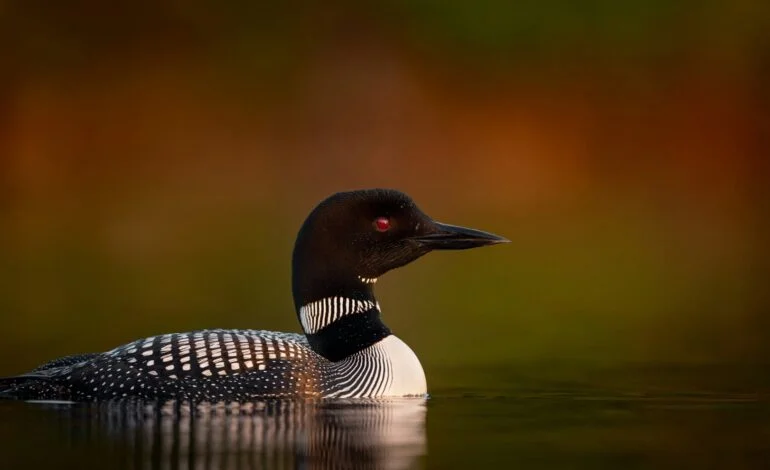
The haunting call of a loon echoing across a lake is a staple of the Canadian summer, but we may be hearing it less frequently in the future. A long-term study of loon numbers and breeding success led by Birds Canada has found that chick survival is declining across North America — with some of the steepest drops seen in Atlantic Canada.
The common loon is not actually Canada’s official national bird (we don’t have one), but it still has an iconic status across the country, cemented by its presence on the $1 coin. So while its overall population remains fairly healthy across the country, signs of its decline are worrying bird lovers everywhere.
The conservation group Birds Canada worked with nine other organizations to create the largest ever study of loons. They collected data on loon breeding spanning almost 50 years from more than 3,400 lakes across Canada and the United States, and the numbers were grim. Between 1975 and 2023 the number of loon chicks surviving to at least six weeks old fell by 40 per cent on average in 10 of 12 regions studied. Ontario and the Prairie provinces both saw steep declines, but Atlantic Canada fared the worst, with a drop of 74 per cent between 1992 and 2023. Only Quebec and Maine had stable chick survival.
The causes of the decline can be difficult to determine, and will vary depending on the lake or region. But some of the likely culprits include the loss of nesting sites to shoreline development, lead poisoning from lost fishing tackle, and increased predation by raccoons and eagles. An increase in heavy rains, caused by climate change, also makes lake water murkier making it harder for diving loons to find food to feed their chicks.
Declining chick survival does not mean that adult populations are immediately in trouble. In Vermont, for example, chick survival has been dropping, but it still remains high enough that the adult population continues to grow. However low survival rates among chicks are a warning sign that there could be problems in the future.
So what can we do to help? An easy way to start is to take part in Birds Canada’s Canadian Lakes Loon Survey, to help them gather more data on loon numbers and chick survival that will help build a better picture of the birds’ population and the threats they face across the country. And when you are out enjoying the lake, using non-toxic and lead-free fishing tackle, disposing of fishing line properly, and slowing down to steer clear of loons will help keep them safe so they can continue providing the soundtrack to summer camping trips for years to come.

