

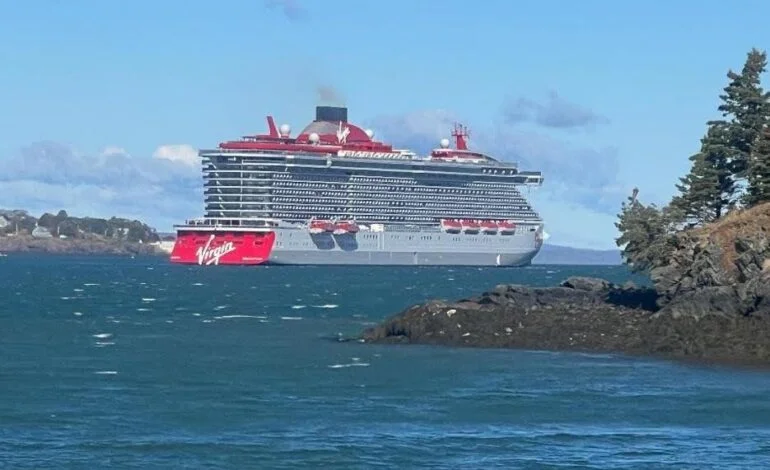
The cruise-ship boom now boosting the fortunes of Maine’s easternmost city could well spread across the border into southwest New Brunswick. In fact, the port director of Eastport, Maine is urging that it do so. And cruise-industry officials themselves are looking for more visits to our side of the border.
What’s creating this opportunity, and what’s needed for Charlotte County to join in?
Eastport multiplied its cruise-vessel passengers over the last decade from 2,000 to 35,000, and port director Chris Gardner expects “to reach 50,000” in the future. Cruise passengers spend money, and new shops and galleries have sprung up in the historic small city.
Why the growth? Partly because of overcrowding elsewhere. Famous Bar Harbour, for example, has limited cruise-ship visits, sending more vessels Down East.
But it’s also because of Eastport’s own efforts, powered by many volunteers. The deep-water port has gained a high reputation among cruise lines, with one company president dubbing it “the most welcoming port city in the world.”
But Eastport is taking care to avoid creating its own overcrowding or damaging the town’s character. It seeks not to attract the biggest “megaships” but vessels that will fit easily into the region during an April-to-November season. The Port Authority remains committed to a “one ship per day” limit even with growing cruise season potential.
And it wants to share the growth with southwest New Brunswick, including St. Andrews and other ports, starting with the closest – Campobello Island.
From a regional standpoint, the island’s Welshpool Landing can be a clearing-in station for other ports in southwest New Brunswick, each with its own beauty, authenticity, and individual appeal. Grand Manan officials, for example, welcomed that prospect in the early days of the Welshpool Landing initiative.
“Every passenger brought to Eastport and not to Campobello and New Brunswick is an opportunity lost on both sides,” Gardner says. “We need cross-border cooperation – more partnerships making possible more local visits.”
The Roosevelt Campobello International Park is already a top provincial tourist draw by road. And for cruise-vessel passengers arriving in Eastport, the port director says that “the Roosevelt Park is their most desired destination.
“Besides, Campobello has beautiful lighthouses and other attractions. With modernized Customs service, we could bring the island hundreds more visitors for every day that cruise ships are here. And we could spread that business to St. Andrews and elsewhere on the Canadian side.
“But we need easier access to Campobello by water. Sending visitors by bus to drive across the bridge from Lubec, Maine can take an hour. By boat it’s a scenic ten minutes.”
To open industry and government eyes to the regional potential, Eastport, the Roosevelt Campobello International Park, and the island’s Welshpool Landing hosted a June “Day on the Bay” for representatives of high-profile groups including Destinations North America, Tourism New Brunswick, and the Cruise Lines International Association.
The consensus was clear. The cruise growth that’s brought changes in some New England ports means new destinations are needed. And in southwest New Brunswick, the sooner the better.
Ron Beckwith, president of the Friars Bay Development Association (FBDA) that runs Welshpool Landing, says that for the Eastport-Campobello connection specifically, “the benefits would run both ways. Eastport has a magical downtown full of tradition and fun. Campobello’s tourists and residents want to get over there. Making boat crossings easier, as they traditionally were, while still respecting security would generate new revenues.
“A chief constraint on our side has been Customs difficulties. It’s not the officials, many are outstanding. But various complications in marine border-crossing could be reworked for smoother operation.”
Cruise lines typically need to include two countries on their routes because of international travel regulations. “Here we’re perfectly situated,” says Chris Gardner of Eastport. “We’ve got two deep-water ports of entry overlooking the same borderline in the bay.”
Beckwith adds that on Campobello, “We’ve welcomed cruise ships in the past. But we need to catch up with the American side and the way they’ve overcome difficulties. For example, Customs officials in Eastport are helping pioneer facial-recognition techniques that make clearances much quicker for cruise passengers.
“And governments on that side see the value of investing in local port facilities.”
Port redevelopment at Welshpool Landing is mostly completed, with the volunteer group itself generating the biggest investment so far; however, significant sharing by federal and provincial governments took place in the past. Completing it would make a major difference, and take only a tiny fraction of port investments elsewhere.
Some Customs readjustments, some construction help – in my opinion, I think it’s not that complex to open up southwest New Brunswick to more marine-tourism revenues. And believe it or not, ordinary people who look at the situation agree. The Friars Bay Development Association early on commissioned a solid study on Welshpool Landing, and no one’s ever challenged it.
To be clear, I was then an official of the FBDA, but now speak with no authority but hope. But I do believe what’s been lacking is sustained attention from the two levels of government. Their in-boxes are full, and we’re outliers down in the Quoddy Region.
But one hopes that the current interest in ports will have an impact. Canada’s federal government views port development as a high priority, and the Premier of New Brunswick has even led a trade mission in Europe to “advance major New Brunswick port projects.”
That’s all to the good, but people my age may recall a great old song about finding what you need back in your own back yard.
Joseph Gough is a former federal public-service executive and author of the Fundy-based novel Come From Away (pen name Joseph Green).