


Swimming in New Brunswick lakes and rivers is a summer tradition, but a growing type of bacteria is making it more dangerous.
Often called pond scum, cyanobacteria are usually not visible and can be found throughout New Brunswick’s waterways.
Roxanne MacKinnon, the executive director of the Atlantic Coastal Action Program (ACAP) in Saint John, said the province is witnessing the population of cyanobacteria explode.
“When we have these really intense rainstorms, we’re getting more runoff and more nutrients being deposited into our waterways,” MacKinnon explained. “Bacteria are really good at taking up those nutrients.”
Under viable conditions, which favor warmer temperatures, rain and extra nutrients, cyanobacteria grow quickly and clump together, forming blooms.
“Phosphorus is one of the key drivers of surface blooms,” MacKinnon said. “In New Brunswick, phosphorus comes from a million different sources.”
She said the best way to mitigate nutrient pollution and prevent blooms is to ensure properties along bodies of water have a proper native vegetative buffer along their edge. This means to keep native bushes and trees along the property’s edge to block runoff.
“The other thing is maintaining septic systems and limiting your fertilizer use,” she said. “Don’t fertilize your lawn before a rain event.”
These blooms contain some species of cyanobacteria that produce cyanotoxins that can cause skin, throat and eye irritation. They can also cause gastrointestinal illness if ingested.
“There’s a slew of toxins that can produce a myriad of interactions,” MacKinnon said.
It is impossible to tell the difference between toxic and non-toxic species with the naked eye.
There are two visible types of blooms, however, dividing the larger group of cyanobacteria into; surface blooming, often found on the surface of freshwater bodies; and benthic, found in clumps or mats at the bottom of waterways.
Each type has different effects on human and animal health.
Usually, surface blooms produce microcystin, known to cause skin irritation, gastrointestinal illness, and potentially more serious illness if ingested.
The other kind — benthic — can produce anatoxins, a group of neurotoxins that can cause skin irritation, gastrointestinal issues and numbness of the fingertips and around the mouth if ingested.
“Most people are less likely to interact with that because we don’t tend to want to swim in green water and we tend not to put slimy gross things from the bottom of the river in our mouth,” she said. “It’s really important to watch small children and pets, particularly dogs, who seem to really love eating benthic mat material.”
How to spot a bloom
When temperatures rise in late spring and early summer, blooms arise and the bacteria become visible in large discoloured sections of water bodies.
“I would recommend that no matter what water body you’re in, do a visual survey for bacteria before you let your dog off-leash or you jump in,” MacKinnon said.
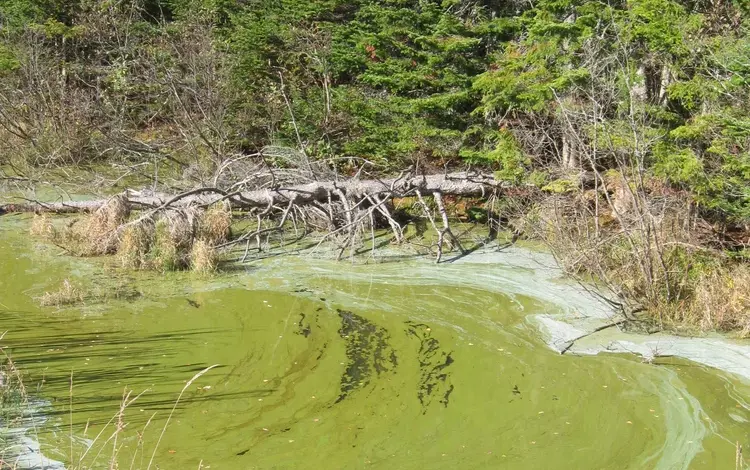
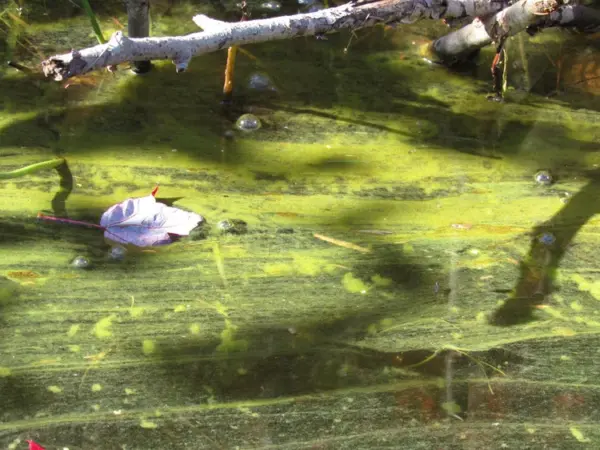
Surface blooms often look like blue or green scum along the surface of the water, and can accumulate along the shore due to wind and waves.
“Sometimes, if it’s a really big bloom, it kind of looks like paint’s been spilled on the water,” MacKinnon said.
Fresh blooms often smell like cut grass, and old blooms sometimes smell foul or rotten. Dogs are attracted to the smell of rotting blooms, putting them at greater risk of exposure to toxins that, if ingested, could be fatal to them.
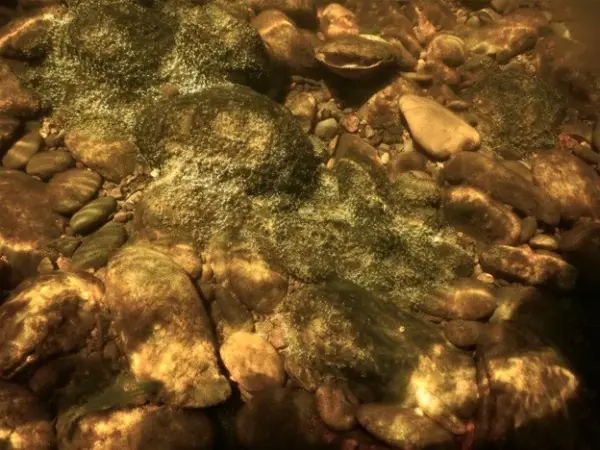
If a bloom is not on the surface, it doesn’t mean one isn’t present. Along the bottom of any slow-moving body of water with favourable conditions, benthic cyanobacteria form mats that also contain many other organisms.
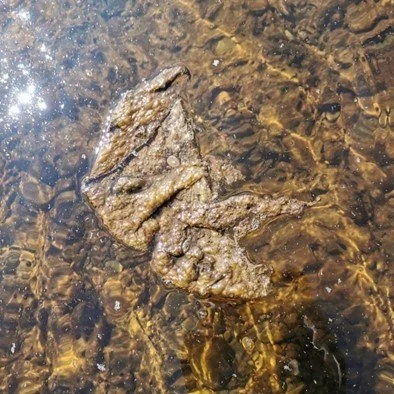
They can be present in water that looks completely clear.
Benthic mats can be dark brown, black, or dark green. They are often dark brown with bits of green and yellow. They often cover rocks and have bubbles strewn along their surface.
Risks and advisories
There are currently 35 Public Health-issued cyanobacteria advisories in New Brunswick; three of those are in Charlotte County. The locations of those advisories include Chamcook Lake, Lake Utopia, and Carters Brook.
If someone identifies a bloom, Public Health urges them to report it to their local Department of Environment and Local Government office.
Public Health said:
- Always supervise children and pets near water.
- Always check the water and avoid swimming in areas with visible surface blooms, scum or benthic mats.
- Do not enter the water with open cuts or wounds.
- Always wash your hands before eating.
- Do not use water from areas with cyanobacteria blooms for washing, drinking or cooking. Boiling the water will not remove toxins. Always obtain drinking water from a clean and safe source.
- Fish caught from water where cyanobacteria blooms are present should have all their organs removed and be rinsed well with clean drinking water before being cooked and eaten.
- Even if no cyanobacteria blooms are present, shower with clean water after being in the water. Toxins can remain in the water for several weeks after surface blooms are no longer visible.
If ingested by dogs, cyanobacteria may cause them to experience vomiting, seizures, breathing difficulties, diarrhea, unconsciousness and sometimes death. Call a veterinarian if you suspect cyanobacteria poisoning.
To prevent cyanobacteria, maintain a buffer of vegetation along the shoreline, do not use fertilizers or pesticide near the water, use phosphate-free cleaning products, and maintain your septic system.