

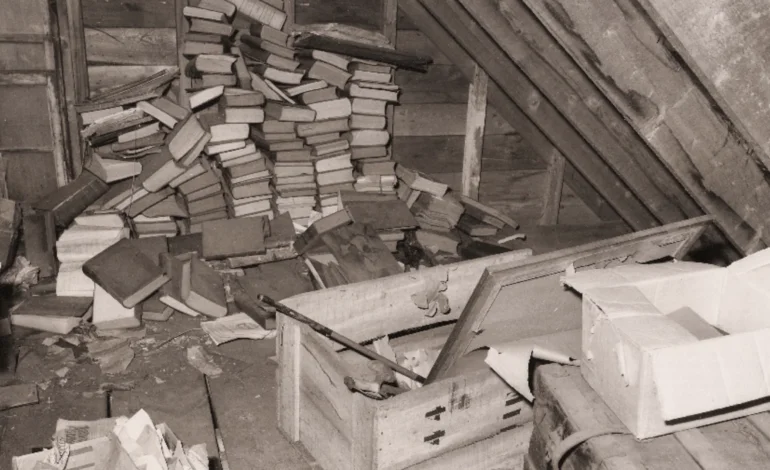
In the decades since the Charlotte County Archives moved into the decommissioned Charlotte County Gaol, our records have grown to 170 linear metres, together about the distance from Honeybeans to Joey’s Grocer: letters, photographs, videos, ledgers, maps, posters, paintings, tapes, diaries, legal papers, scrapbooks, and local life at all levels. The formal correspondence of lawyers share space with family albums filled with snapshots of beloved pets. Diaries of rural farmers join manuscripts of plays by Grace Helen Mowat.
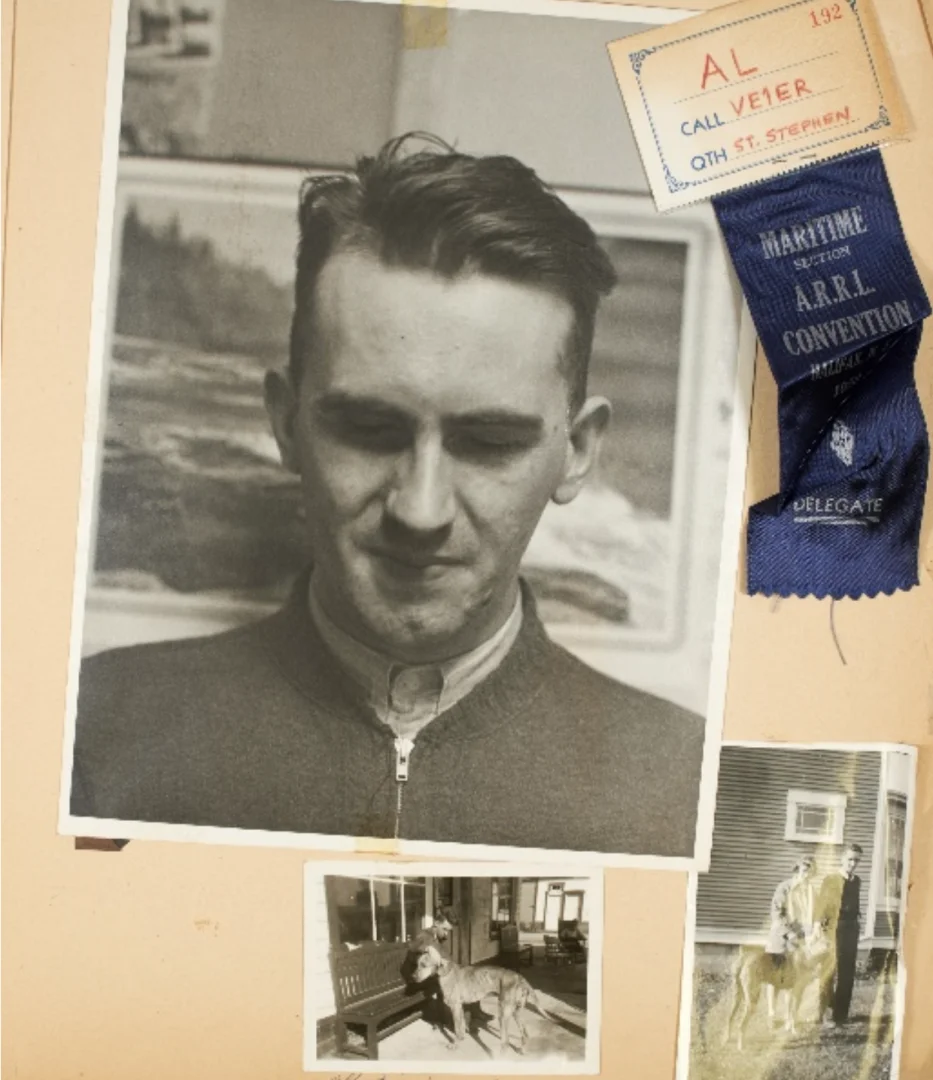 One such collection tells the story of Albert McQuoid, a talented musician, highly regarded mechanic, avid ham radio operator, piano tuner, community organization member, and recipient of the Order of Canada. He was also completely blind.
Albert was born in St. Andrews in 1923. From ages 9 to 17 he attended the Halifax School for the Blind, where he studied piano and piano tuning. He kept up both on his return to St. Andrews, as well as getting involved in the garage of his father, who owned a taxi service. He became a fully self-taught expert auto mechanic, using touch to diagnose and treat a range of car issues.
So well-tuned was his sense of touch that Albert picked up the organ and accordion as well as the piano, and for decades was involved in all kinds of musical events. He played the organ at the Greenock Church for over twenty years, and also the organ at the skating rink. He played the piano at the Algonquin. During World War Two he was part of the orchestra at the Pennfield RCAF base.
Albert made such an impact that in 1973, he was awarded the Order of Canada, “For the example he has given to others as a sightless person and for his contribution in the community of St. Andrews, New Brunswick, as a musician, a mechanic and radio operator.”
Like Albert’s, we can piece the story of Sarah Jameson Craig together through records currently in the Archives today. Though she actually was born in St. Andrews, in 1840, to parents Charles and Alice Jameson, when Sarah was a year and a half old the family moved to a farm in northern St. Patrick’s Parish, a region sparsely populated and highly wooded, where she would live for the next 45 years. There were no schools in this area, but Sarah’s parents strongly believed in education and ensured their children were literate and informed about the world. Sarah in particular took to the page, aspiring to being a writer from a young age. She kept detailed diaries her whole life, repurposing some of them into an autobiography in her senior years.
Sarah may have lived in essentially the middle of nowhere, but through print, she had access to a range of ideas disseminated in the day’s journals and books, which she was able to get in St. Stephen and Calais, and was strongly attracted to progressive new notions of women’s equality and what we today would call ‘wellness’. At only 17 she adopted what was known as ‘reform dress’ which essentially consisted of less constraining clothes for women, with wide pants—popularly known as bloomers—under a dress with short-ish skirt.
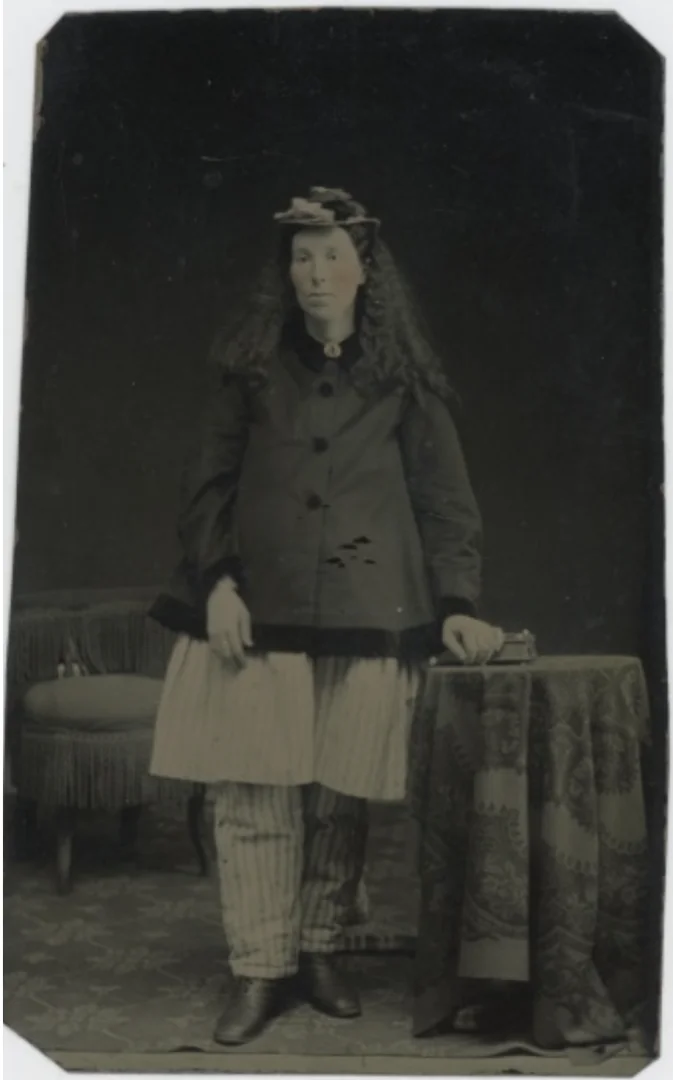
This was radical even in urban centres and extremely shocking in rural Charlotte County. While her parents were supportive, and she even got her younger sister to follow suit, she got many comments like her grandmothers, who called the outfit “an abomination to the Lord.” Still Sarah persisted in wearing this reform dress for the next few decades.
The reform dress movement was very tied with other ‘modern’ notions of health and hygiene, especially hydrotherapy, which centered water in healing processes and emphasized a ‘clean’ lifestyle. Sarah shared her enthusiasm about these ideas with her cousin Joel, was disabled from a leg wound that had healed badly due to poor cleaning, making the appeal of water-based therapy understandable.
In 1860 Sarah and Joel married, despite some family apprehension due to how poor they both were. Poverty, however, was no deterrent to their ideals, and soon they founded the “Universal Progressive Reform Association,” which was mostly family and some neighbours, committed to vegetarianism, abstinence from alcohol, tobacco, caffeine, and salt, reform dress, women’s equality, communal living, and children’s education. A goal was to found an Edenic commune in the American West, and though Sarah and Joel got correspondents interested, they never had quite enough money to actually get it going. They did manage to essentially crowdfund a small printing press, however, which they used to keep up with their information network. They also raised 9 children to adulthood, many of whom later settled in other parts of Charlotte County.
Today, our collections brim with stories like these. We care for these materials not merely so they endure, but so they can be discovered by everyone, from seasoned historians to high school students. For more than fifty years, the Charlotte County Archives has survived without regular government funding, sustained entirely by community generosity and volunteer spirit.
As we look toward our next fifty years, our goal is to deepen those community ties. Whether you are an old friend or a curious newcomer, we invite you to think of us on our December 10th birthday and raise a toast to over half a century of preserving Charlotte County’s heritage. Dig for ancestors. Uncover forgotten stories. Make new meanings. We believe archives are for everyone.
– With edits from Kevin Heslop
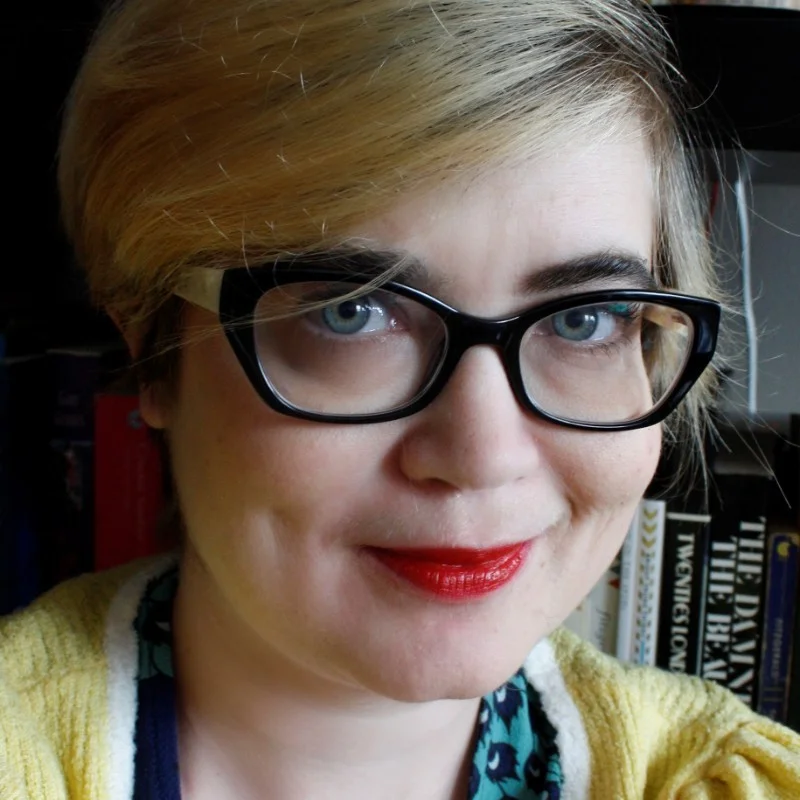 Anna Krentz is the Archives Manager of the Charlotte County Archives. As an archivist, historical researcher, and writer, her interdisciplinary background includes an MA from Toronto Metropolitan University and Honours BA from St. Francis Xavier University, as well as, graduate coursework in the History department at the University of Toronto.