

Statistics Canada’s 2025 Canadian Social Survey (CSS) has reported 53 per cent of Canadians are concerned about climate change.
The survey was conducted between April 25 and June 16, 2025. It asked questions specifically about climate change for the first time. Fifty-three per cent said they were either very or extremely concerned about climate change. The survey also showed that 30 per cent of Canadians felt stressed about the topic at least once a month.
Gilles LePage, New Brunswick’s Minister of Environment and Climate Change, said this statistic is a direct result of climate effects the province is experiencing.
“People are concerned for at least one of the effects of climate change, whether it be drought, whether it be coastal erosion, whether it be forest fires,” LePage said. “There’s always something in the back of the mind of people.”
LePage said those issues are top of mind for the province’s representatives.
The survey also showed 47 per cent of individuals were somewhat, not very, or not at all concerned about climate change.
According to LePage, climate anxiety is something felt mainly by people directly impacted by it.
“If you’re talking to the people on the peninsula, I can tell you that everyone’s worried about coastal erosion,” LePage said. “If you’re talking to somebody in my neck of the woods, everybody’s worried about forest fires. If you’re talking about the farmers, they’re all worried about drought issues.”
The CSS reported that those experiencing stress and anxiety about climate change were more likely to take action.
Of those with more concern, 79 per cent were reducing food waste and 73 per cent were reducing energy consumption. This compares to 53 per cent and 44 per cent, respectively, among those with lower levels of concern.
Local non-profit organizations and municipalities play a critical role in climate action, LePage said.
Moe Qureshi, the director of climate research and policy at the Conservation Council of New Brunswick, a non-profit organization that works to protect the province’s air, land, and water, said he is mainly concerned with carbon emissions.
“I think although New Brunswick has dropped emissions quite effectively over the last decade or so, we seem to be on a trend that might be increasing in the last few years,” Qureshi said.
He said the largest effect of climate change in New Brunswick is large algal blooms due to the change in water temperatures.
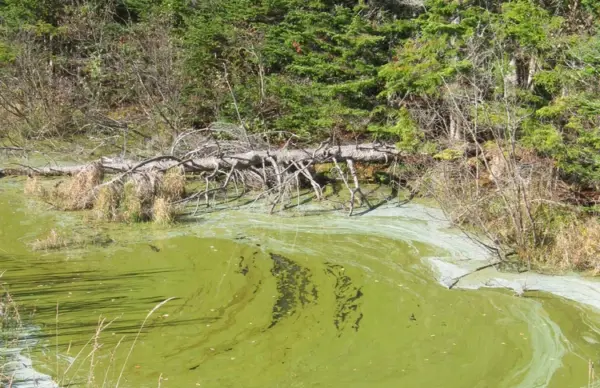
“When I walk my dog, we like to go swimming in the river,” Qureshi said. “Recently we’ve been getting advisories and warnings that we shouldn’t do that anymore because dogs could get sick or possibly die if they end up drinking too much of this algal bloom water.”
He also said in the last few years there has been a large increase in tick populations.
“Ticks have been something I used to never think about, but suddenly, now I need to worry about them,” Qureshi said.

He said due to the less extreme winters New Brunswick is facing as an effect of climate change, ticks are not dying off in the frost. This allows them to maintain their population over the colder months.
Qureshi said he’s happy to have New Brunswick’s first Provincial Climate Change Risk Assessment, which highlights local climate change issues and backs them up with data, identifying current and future climate issues.
“These are now official government documents showing that the climate is changing and it is negatively affecting us,” Qureshi said.
The document’s key findings include hotter summers, milder winters, heavier rainfall events, rising sea levels and damaging storms. It said these risks will intensify, shifting from moderate today to critical or severe by the 2050s and 2080s.
Kalen Mawer, the executive director of Eastern Charlotte Waterways, said the CSS survey may have had different answers if the question had been asked in other ways.
“If they’d asked all the folks in Charlotte County: ‘who’s concerned with the increased number of storms?’ you’d probably get a way bigger percentage than 50,” Mawer said. “If they broke it down into the components of what’s actually happening on the ground, I think they’d get a lot more than 50 per cent, which is concerning. I feel bad about that.”
She said that a lot of people can’t quite grasp what climate change really is or what it means. It often seems like a far-off issue compared to what people are actually experiencing, but its effects are here, Mawer said.
“When we had a storm a few years back in Saint Andrews and the trestle near Katy’s Cove got all damaged,” she said. “When people see the effects on the ground, I think it becomes a lot more tangible.”
In order to combat these changes, New Brunswick prepares an annual Climate Change Fund (CCF) document, which outlines projects and the capital funds necessary to complete them.
The 2026–2027 document includes key projects for Charlotte County, such as the Saint Andrews wharf rehabilitation project. There are also coastal gauges in the Saint Andrews area that will measure sea-level rise, as well as an assessment of coastal erosion risks in the Bay of Fundy, and the Living Shorelines Program (LSP).
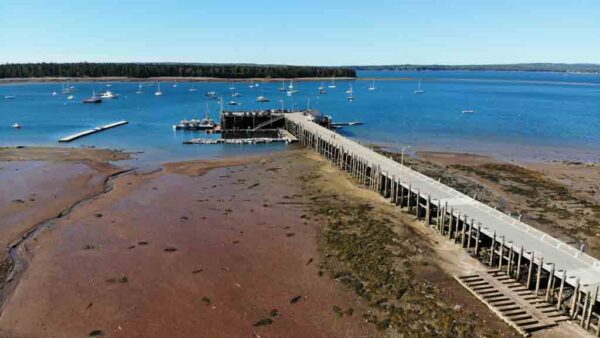
The LSP will strengthen the province’s shorelines through the use of native plants, sand and rock — natural materials instead of hard seawalls for coastal protection. This project has already been implemented at New River Beach.
LePage said in order for action to take place, every individual must be environmentally conscious in their lives and the actions they take.
“If we can use less gas, less fuel, whether we go biking, whether we walk to work or to do our chores,” LePage said. “Those are all little actions, but [they have an effect] in the long run.”