


Where does your food come from?
Well, it is something Tom Taylor, the executive director of the Atlantic Canada Fish Farmers Association (ACFFA), would like people to know.
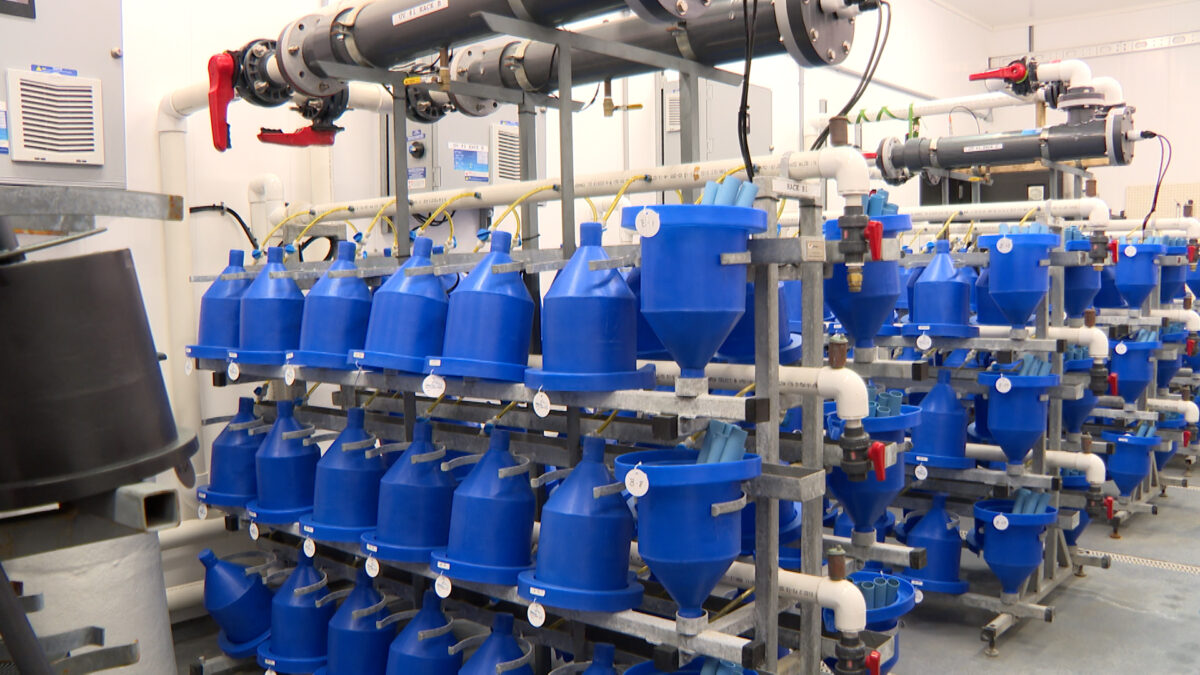
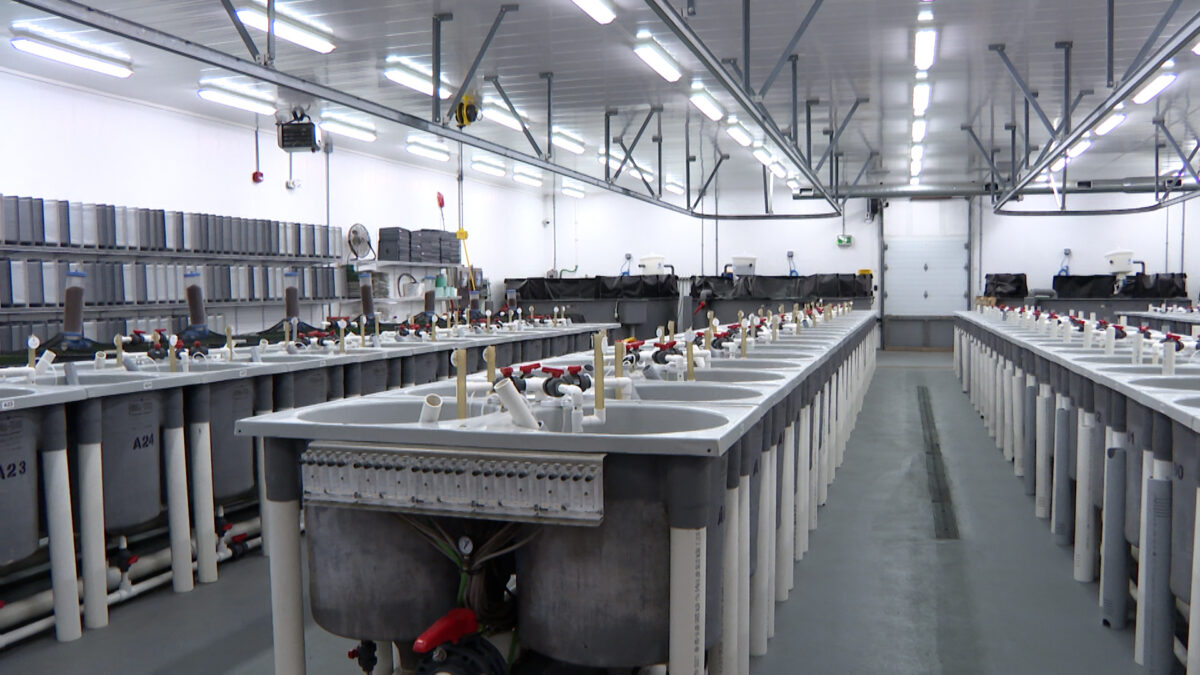
For Atlantic salmon farmed by Cooke Aquaculture, it starts in a hatchery in Oak Bay — about 10 kilometres from St. Stephen, New Brunswick — where thousands of eggs are brought for fertilization.
Those fertilized eggs then grow into alevins who feed off a yolk sac. Once the sac is gone, they transform into fry, feeding from timed food pellets. Then begins a major transformation that takes between 10 and 18 months: as the fry become smolts, they prepare to go from fresh water to salt water.
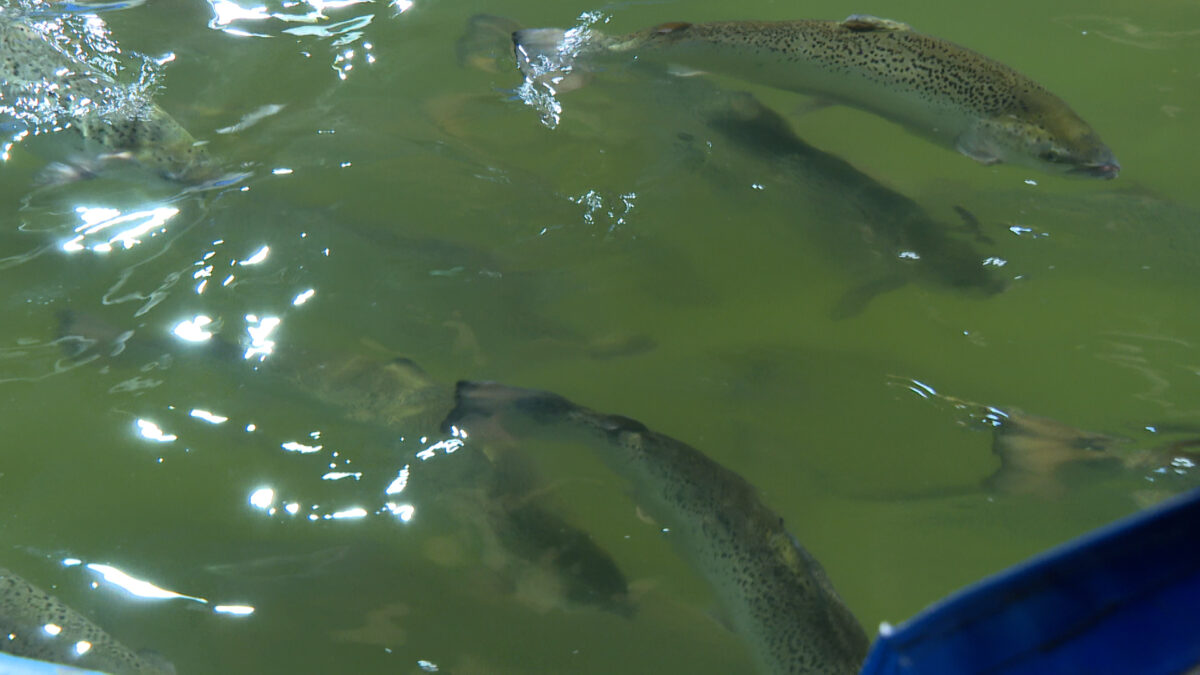
Eventually, the salmon are transferred into ocean pens in the Bay of Fundy.
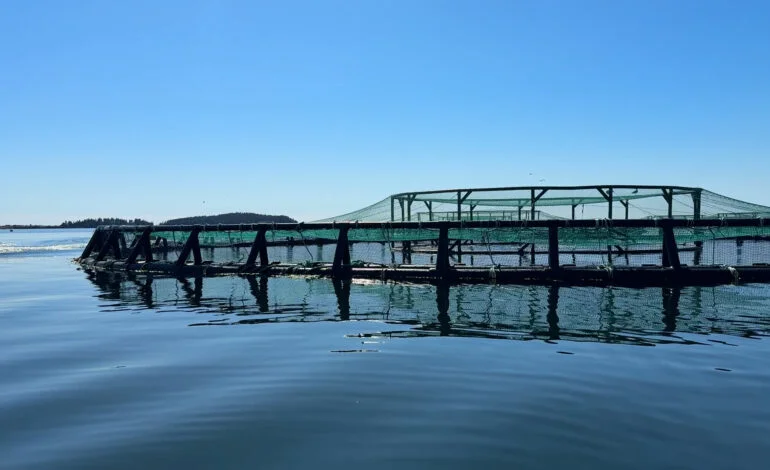
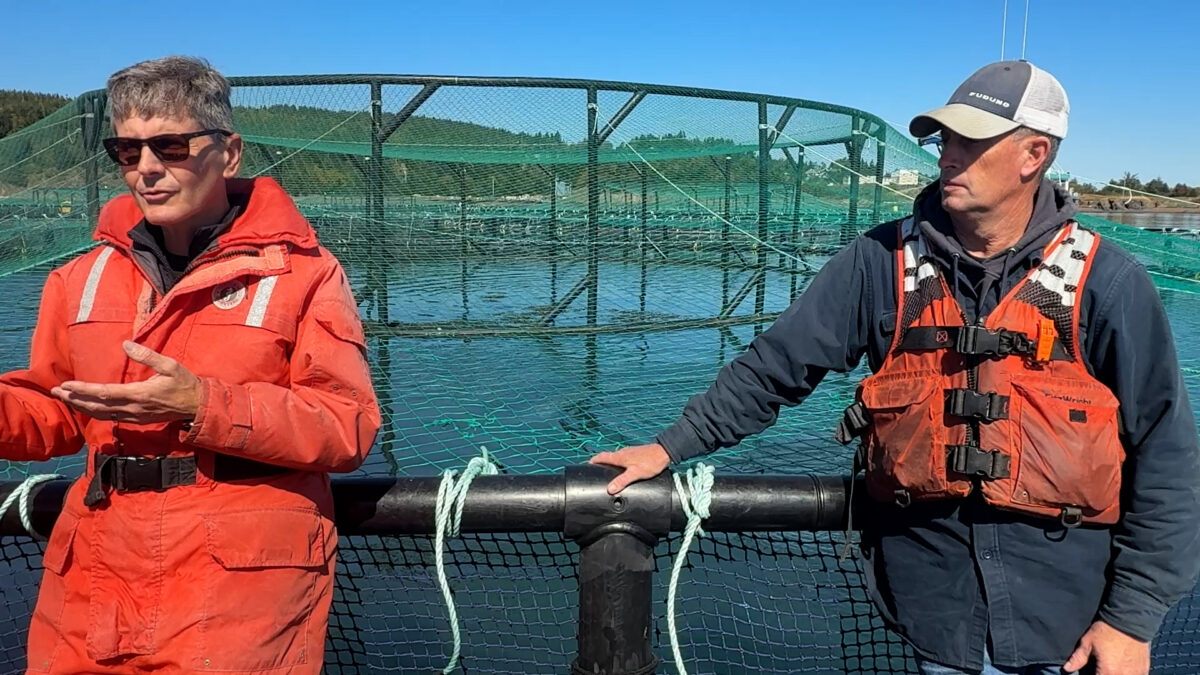
“We have about 25,000 fish in this cage at the moment,” Taylor said, standing on the edge of a suspended fishing pen in Back Bay. “We have a containment net here that holds our fish in safely and keeps the predators out. Our objective is to protect our animals and raise them to market weight so we can harvest them.”
Open-net pens are what they are traditionally known as.
As a boat captain from Fundy Tide Runners drove reporters out onto the waters in Back Bay, it wasn’t long before the group approached 14 open-net pens.
Some had fishing boats alongside them; others simply had large salmon jumping.
These large round nets have a small hoop at the top to keep out airborne predators and to avoid the upper net from collapsing down onto the water.
This part of the process has drawn concerns from environmental groups. Issues like pathogen and parasite transfer, seabed pollution, and escape and wildlife conflicts are among the things the industry has been challenged on.
Regulatory changes
In British Columbia, where the federal government regulates the aquaculture industry, there is a plan to ban open-net pen salmon farming in coastal regions by 2029.
The Department of Fisheries and Oceans (DFO) said in a statement it works closely with Indigenous groups, federal and provincial partners, stakeholders, and industry to sustainably manage aquaculture in Canada while minimizing risks to wild fish populations.
“On September 20, 2024, the Government of Canada published a draft Salmon Aquaculture Transition Plan for British Columbia, which served as the basis for consultations and engagement,” the statement said. “The government subsequently engaged and consulted extensively with First Nations, communities, industry and other stakeholders in British Columbia.”
The department said feedback that it received through the process has informed the ongoing deliberations regarding salmon aquaculture in the province.
“Any future decisions related to salmon aquaculture transition in British Columbia will be communicated by the Government of Canada in due course,” the statement said.
DFO said it is the lead regulator in British Columbia and Prince Edward Island, but not the other provinces or territories.
“DFO fully respects the authority of provinces in their regulation of aquaculture,” the statement said.
A W5 investigation revealed a confidential memo that said at least 15 salmon farms on the B.C. coast should be reopened because the salmon farms “posed minimal risk” to salmon populations.
In New Brunswick, the aquaculture industry is provincially regulated.
The Department of Agriculture, Aquaculture and Fisheries said the provincial government is not considering any significant changes to New Brunswick’s current aquaculture production model.
“Currently, the department continues to support marine-based salmon farming as a safe, effective and economically important method of producing Atlantic salmon,” the department said in a statement. “The industry operates within a robust regulatory framework designed to support fish health, environmental stewardship and sustainable growth. We work closely with researchers and industry to support improvements in production techniques and adoption of new and innovative technologies within the sector.”
The department said salmon farming began in the province in 1970 and New Brunswick has been a leader in the industry. The province is actively involved in aquaculture-specific research with Fisheries and Oceans Canada (the St. Andrews Biological Station).
“The department continually monitors scientific research, regulatory findings and industry performance data from New Brunswick and other aquaculture jurisdictions. Based on the available evidence and the regulatory measures in place, we are confident that current farming practices can be conducted responsibly while supporting a sustainable aquaculture sector,” the department said in a statement.
AAF said there are active programs for sea lice monitoring, fish health surveillance, reporting of fish escapes and environmental oversight.
Fresh water to salt water
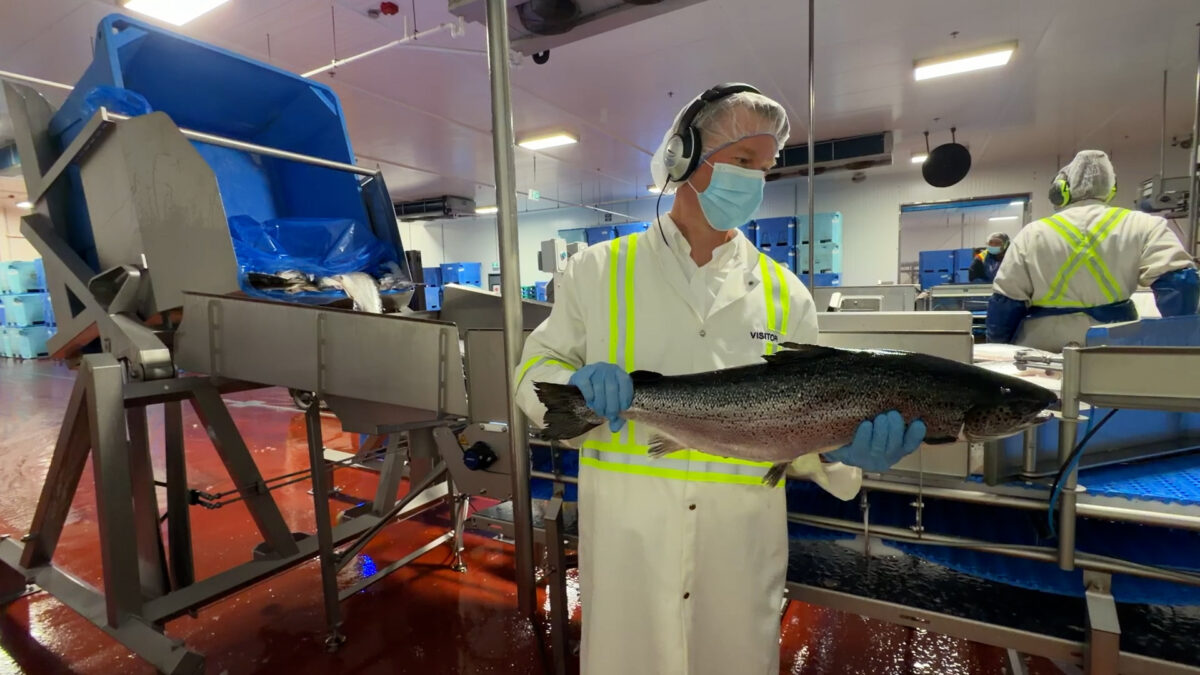
After the fish grow to a weight suitable for processing, they are moved to a facility in St. George. The fish are stunned electrically and then bled.
“You want to stun the animal as quickly as you can to protect its quality and its humaneness,” Taylor said.
He said the blood water — the water and blood combined — is held in a containment area on the boat and pumped out at the processing facility for proper disposal.
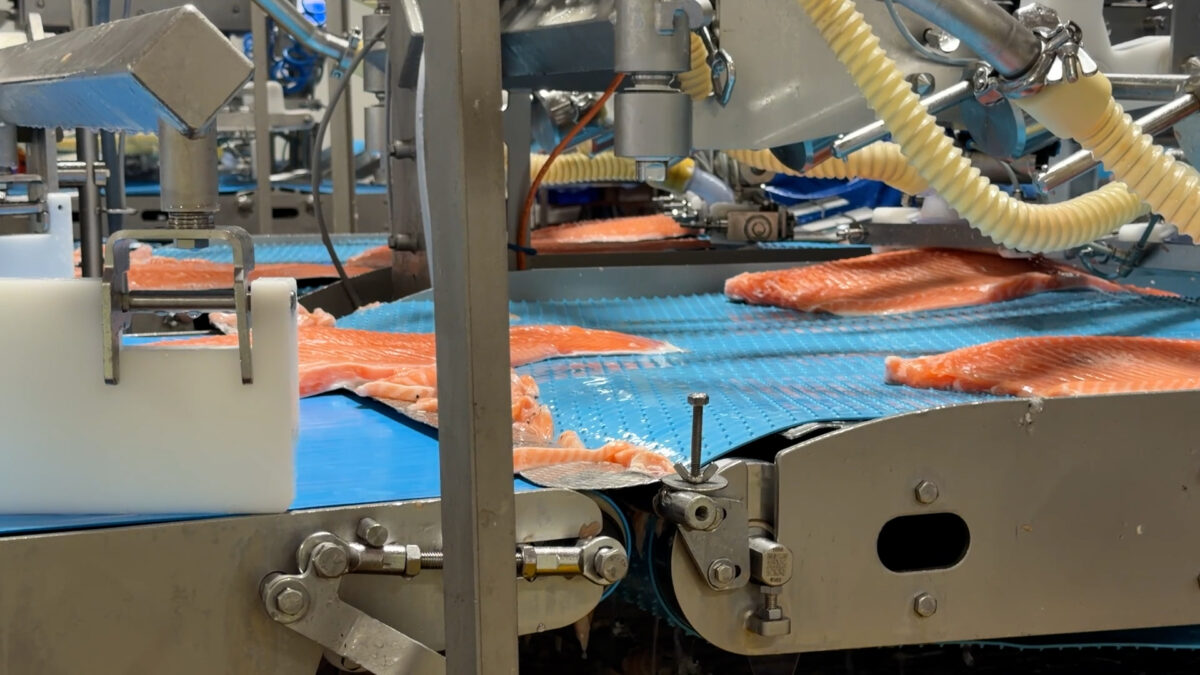
At the processing facility, there is no part of the salmon that isn’t used. The head is severed from the body and utilized for animal feed, fish oil and omega-3 extraction, as well as export for human consumption. The fatty pieces are trimmed off and kept to make smoked salmon. Even the scales are used to extract marine collagen and gelatin as well as animal feed and fertilizer.
The company is also working with First Nations who have expressed interest in tanning skins for making leather products.
The salmon is then packaged and shipped off to the company’s customers — a three-year process in total.
“It does take time and it is farmed with care right here in New Brunswick,” Joel Richardson, vice president of public relations for Cooke Inc., said in an interview.
Richardson said the process is evolving, including the technology used by the company. Cooke uses underwater cameras, temperature sensors and large feeding systems.
“We’re building this new technology to basically create for the future of aquaculture and leveraging that technology from all around the world,” he said.
Cooke Aquaculture was founded in 1985 in Blacks Harbour. It now operates in 16 countries and employs 15,000 people worldwide.
Taylor spoke to the conservation efforts the company has undertaken.
“We have to be responsible when we grow our industry,” he said. “I want to mention we live and breathe conservation every day because if it’s unhealthy conditions for animals, you will have very inefficient production. You’ll be out of business pretty quick.”
He said they clean the nets and the floor of the pens, adding they have technology to do that work. It’s a process that both Richardson and Taylor believe is important to understand.
“People need to understand where their food comes from,” Richardson said.
Impacts of imports
Amid a trade war with the U.S. and global uncertainty, Canada has turned to its local industries to strengthen the country’s economy and independence.
Still, Richardson said Canada imports nearly $765 million worth of Atlantic salmon — or the equivalent of 46,000 metric tons.
“One of the things that we’re concerned about is there is a significant amount of imports of Atlantic salmon and other seafood that’s being flown into Canada at two and three times the carbon footprint,” he said.
He said under the Canadian Food Inspection Agency (CFIA), salmon flown in from another country and processed in Canada is granted a ‘Product of Canada’ label.
The Courier reached out to the CFIA and is awaiting a response.
“We don’t think that is fair,” he said. “Unless seafood is harvested and fished here in Atlantic Canada or anywhere in Canada, we don’t think it should be allowed to have the ‘Product of Canada’ label.”
Local jobs, global industry
The aquaculture industry is something local leaders have been working to protect.
Eastern Charlotte Mayor John Craig was invited to Ottawa by the City of Campbell River, a coastal community in British Columbia, to advocate against the ban of open-net pens on the west coast and ensure it would not be extended to the east coast.
The trip was the subject of a code of conduct complaint, but it was never made clear whether the reprimand Craig received as part of the complaint process included the trip.
Richardson said both Craig and Campbell River Mayor Kermit Dahl told the prime minister and the Minister of Fisheries and Oceans Canada that communities like theirs wish to grow the industry. Richardson contends other countries are outproducing Canada.
“We want to eat more Canadian seafood,” Richardson said. “We shouldn’t be suppressing production in Canada, whether it is on the west coast or the east coast. We have all kinds of coastline. We are definitely underproducing and underharvesting in Canada. The world is going to pass us by if we don’t get with the program in this country.”
Municipal governments play a significant role in advocating for the betterment of the industry and the people who work in it, he said.
Of the 9,400 employees in Atlantic Canada, 5,000 are in New Brunswick — many of them in Charlotte County.
Cooke Inc. said much of its work is year-round employment, including sea farmers working on the ocean, truck drivers, processing plant employees, engineers, veterinarians, lawyers and accountants, among others.
“We are now the largest family-owned seafood company in the world, but the Cooke family and our operations are working to stay true to our roots here in New Brunswick and Atlantic Canada,” Richardson said.
For Taylor, the 35-year evolution has given him hope for a promising outcome and a future that is full of opportunity.
“We’re very excited to see how we do this and carry this forward for the next generation … in providing healthy food locally and creating the jobs that come with that that don’t even exist today,” Taylor said.